 EN
EN
 English
  中文简体
中文简体
Home / News / Industry News / Common Pesticide Formulations Explained: EC, WG, SL, SC, WP and How to Choose
Industry News
Content
When you pick up a jug, bag, bottle, or sachet of crop protection product, the first thing you notice after the active ingredient name is a short code such as EC, WG, SL, SC, or WP. These codes are not optional label decoration. They describe the physical form in which the active ingredient is delivered, how it behaves when added to water, how it should be mixed, sprayed, stored, and handled, and what kind of safety precautions are necessary.
The key conclusion is straightforward: formulation type determines how a product works from the moment it leaves the factory to the moment it lands on the target plant. A strong active ingredient can fail completely if the formulation is unstable, incompatible with the local spray water, difficult to measure, or unsafe for the operator. That is why farmers, distributors, field advisers, and procurement teams should evaluate formulation type with the same seriousness they give to the active ingredient.
For Yancheng Limin Chemical Co., Ltd., which has been manufacturing agrochemicals since 1986, formulation is more than a production step. The company's product catalogue spans pesticide technicals, finished formulations, fertilizers, and pesticide intermediates, and its two production bases support both technical synthesis and formulation processing. That kind of vertical reach gives formulators practical experience with real interactions between active ingredients, carriers, emulsifiers, wetting agents, and dispersion aids. You can read more about the company's background and production capabilities on its about page.
This guide explains the most common pesticide formulation categories, how they differ in the spray tank and in the field, how to choose between them, and what checks to make before buying. The goal is to help you make decisions that are safe, practical, and efficient.
Formulation codes are a type of shorthand developed within the agrochemical industry and used by regulators, testing laboratories, and suppliers around the world. Bodies such as the Collaborative International Pesticides Analytical Council, often called CIPAC, and the Food and Agriculture Organization of the United Nations, known as FAO, have contributed to the standardisation of these codes and the test methods used to verify them.
The code tells you the physical system of the product, not the mode of action and not the chemical family of the active ingredient. For example, an EC product and an SC product might contain the same active ingredient at the same concentration, but they will behave very differently in the spray tank and on the leaf.
| Code | Full Name | Physical Form after Dilution in Water |
|---|---|---|
| EC | Emulsifiable Concentrate | Oil droplets dispersed in water, forming an emulsion |
| WG or WDG | Water-Dispersible Granule | Granules break apart into a suspension of fine solid particles |
| SL | Soluble Liquid Concentrate | A true solution of the active ingredient in water |
| SC | Suspension Concentrate | Fine solid particles suspended in water |
| WP | Wettable Powder | Powder particles suspended in water, requiring agitation |
Understanding these codes helps you predict what will happen when you open the package, measure the product, pour it into the spray tank, and begin application. It also helps you compare products from different suppliers, because the same formulation code should behave in similar ways regardless of brand, provided quality control is reliable.
Formulation type is often treated as a technical detail that only matters to laboratory chemists. In practice, it affects almost every practical aspect of crop protection.
An EC product depends on emulsifiers to stabilise oil droplets in water. If the emulsion breaks, you may see free oil on the surface, creamy layers, or large droplets that block nozzles and cause uneven application. An SC product depends on suspending agents to keep solid particles in motion. If suspensibility is poor, the product settles quickly at the bottom of the tank, and the first part of the spray pass is too concentrated while the last part is too dilute. A WG product depends on rapid disintegration and dispersion. If granules do not break down properly, particles can remain large enough to clog filters or create uneven deposits on leaf surfaces.
EC formulations form an emulsion that dries on the leaf and leaves a layer of active ingredient. Because the active is dissolved in a solvent droplet, it often has good penetration into the leaf or insect body. SC formulations leave fine solid particles on the surface. They can be persistent, but they may need good coverage to work well. SL formulations place the active as a true solution, which can be absorbed quickly by plant tissues or the target pest, depending on the product's systemic properties.
EC products contain organic solvents, so they may be flammable, have a strong smell, and require careful disposal of rinse water. SC products are water based, which reduces solvent risk but introduces freeze-thaw sensitivity and long-term settling problems. WG products are dry, which makes them easier to carry and dose, but they must be protected from moisture. WP products are dusty and can cause inhalation exposure when poured. SL products are easy to pour and measure, but not every active ingredient can be formulated as a soluble liquid.
Formulation also influences packaging type, shipping classification, warehouse conditions, shelf life, and even the cost per gram of active ingredient. For procurement teams, the true cost of a pesticide is not only the price per litre or kilogram; it also includes mixing time, nozzle cleaning, failed applications, safety equipment, and losses from product breakdown during storage.
EC is one of the oldest and most widely used liquid formulation types. In an EC product, the active ingredient is dissolved in an organic solvent, and emulsifiers are added so that the concentrate forms a stable oil-in-water emulsion when diluted with water.
When you pour EC into a spray tank with agitation, the concentrated liquid disperses as tiny droplets. The tank mix looks milky. The active ingredient remains dissolved in the oil phase, and the emulsion should remain stable long enough for uniform application.
In insect control, combinations of oil-soluble actives are often formulated as EC because the solvents keep both active ingredients in a single stable phase. One example is the insecticide combination of beta-cypermethrin and chlorpyrifos, which is commonly used in field situations where chewing and sucking pests appear together.
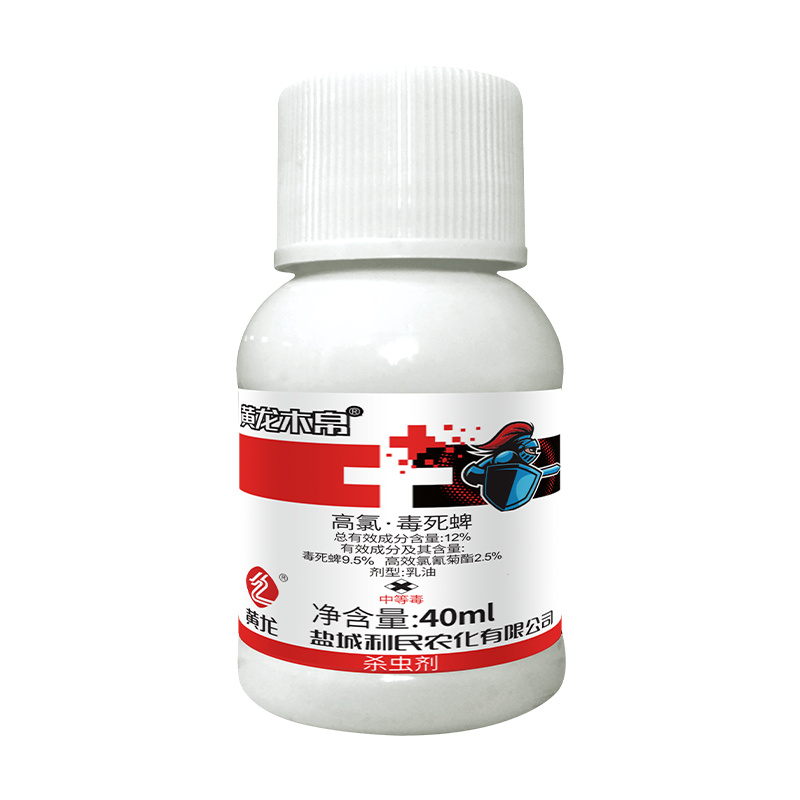 Beta-cypermethrin and Chlorpyrifos Emulsifiable ConcentrateThis EC combines beta-cypermethrin and chlorpyrifos for tackling mixed chewing and sucking pests in field crops. It is positioned before a discussion of water-dispersible granules, offering a solvent-based alternative for oil-soluble actives.View Product →
WG, also written as WDG, stands for Water-Dispersible Granule. It is a solid formulation in which the active ingredient, wetting agents, dispersants, binders, and other carriers are formed into free-flowing granules. When added to water, the granules break down and release fine solid particles into suspension.
It is important to understand that WG does not dissolve in the way sugar dissolves in water. It disperses. The resulting tank mix is a suspension of very small solid particles, not a clear solution. For that reason, the quality of the dispersant system is critical. A good WG product should rapidly wet, sink, break down, and stay suspended with normal agitation.
WG is often used for solid active ingredients that need to be delivered in high concentration with low dust exposure. A good example in the insecticide market is a combination of pymetrozine and dinotefuran; both actives are solid at room temperature, and the WG form allows a high-load, low-dust, water-based suspension that is easy to handle in the field.
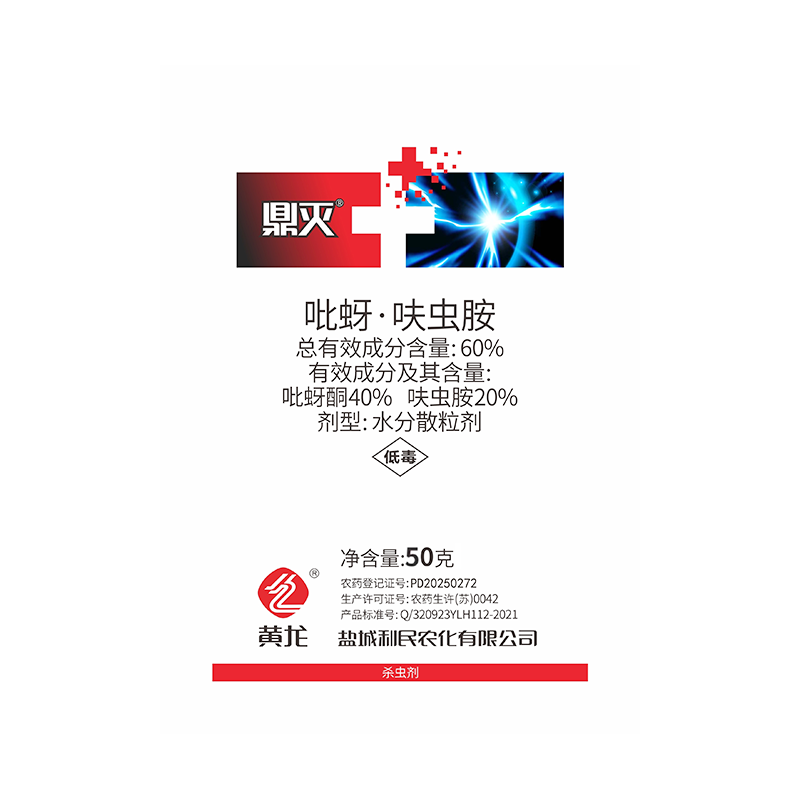 High-Load Pymetrozine and Dinotefuran Water-Dispersible GranuleThis WDG delivers two solid insecticides with different modes of action, targeting rice planthoppers and other sap-feeding pests. It appears before an explanation of soluble concentrates, highlighting a low-dust solid option for high-concentration delivery.View Product →
SL, sometimes called soluble concentrate, is one of the simplest formulation types from the applicator's point of view. The active ingredient is soluble in water or in a water-miscible carrier. When the product is added to water, it forms a true molecular solution. There are no oil droplets and no solid particles to keep suspended.
This simplicity is exactly why SL products are valued in situations where a clear tank mix is preferred. Because the active ingredient is fully dissolved, the risk of nozzle blockage is lower, and the product can be more evenly distributed through the spray system. SL products also tend to be easy to pour, measure, and rinse from containers.
SL is a common choice for many foliar systemic fungicides and insecticides, but it remains underused in some markets because buyers simply do not ask about it. If you are sourcing a product with highly water-soluble active ingredient, request an SL option and compare its handling, stability, and cost against a WG or SC.
SC is a water-based liquid formulation in which the active ingredient is milled into very small solid particles and kept suspended in water with the help of wetting agents, dispersants, and rheology modifiers. When you look at the container, it appears as a thick liquid, almost like a flowing paste. When poured into water, it disperses into a suspension of fine particles.
SC is particularly important in modern agriculture because it combines the convenience of a liquid with the solvent reduction benefits of a water-based system. It is widely used for fungicides, seed treatments, and insecticides where good suspension stability and low operator exposure matter.
SC formulations are very common in modern fungicide programmes because many triazole and strobilurin active ingredients can be milled into stable suspensions. A practical example is the combination of hexaconazole and azoxystrobin. Both fungicides have different modes of action, and an SC formulation gives the grower a water-based liquid that is easy to mix with other products while providing two protective and curative components.
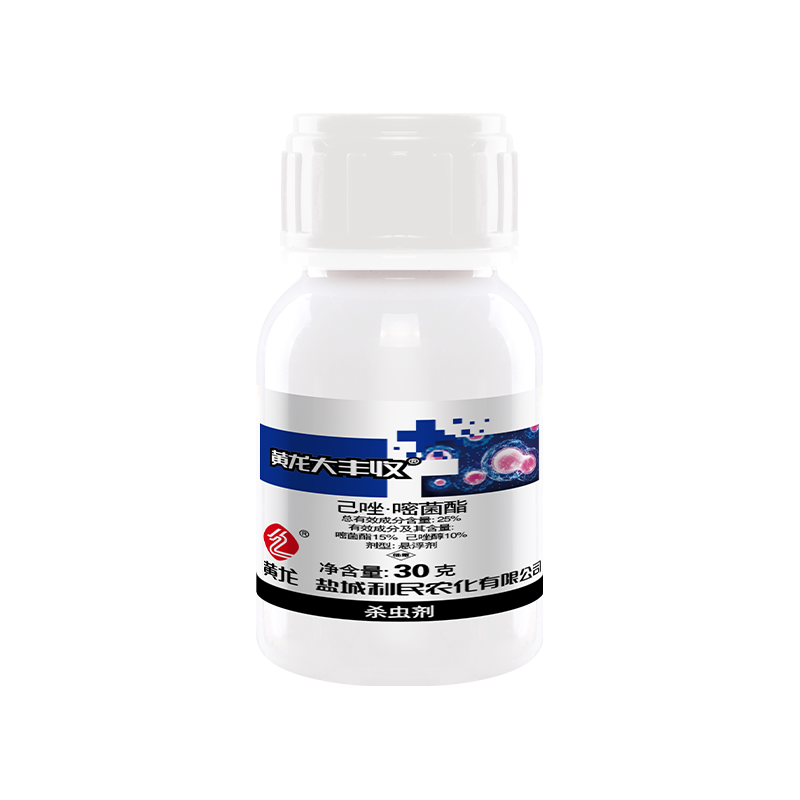 Hexaconazole and Azoxystrobin Suspension ConcentrateThis SC combines a triazole and a strobilurin fungicide for rice sheath blight, offering systemic protective and curative activity. It is introduced after a discussion of SC formulations, providing a practical example of a water-based fungicide mixture.View Product →
EC, WG, SL, and SC cover the majority of products in many markets, but you will also see other codes on labels and technical data sheets.
WP is one of the oldest solid formulations. The active ingredient is mixed with finely divided carriers and wetting agents to produce a powder that can be suspended in water. WP products are often cheaper to manufacture and can carry high active ingredient loads. However, they are dusty during pouring and measuring, and the powder can settle quickly if agitation is interrupted. WP is still common in some crops and regions where cost is the main purchasing driver.
EW is similar to EC in that the active ingredient is dissolved in oil droplets, but the continuous phase is water. The product is an emulsion in the container, not a concentrate that forms an emulsion only after dilution. EW usually contains less solvent than EC and has a lower flammability risk. It is a good option when you need the biological benefits of an oil-phase formulation but prefer a safer handling profile.
OD, or oil dispersion, contains solid active particles suspended in a continuous oil phase. It is useful for active ingredients that are unstable in water or for products intended to remain active on waxy leaf surfaces. OD products can provide better rainfastness, reduced drift, and improved delivery of lipophilic actives.
SP is a dry powder that dissolves in water to form a true solution. It is the solid equivalent of SL. SP products are easy to store and transport, but they can be dusty and must be protected from moisture.
FS stands for flowable suspension used specifically for seed treatment. The product may contain fungicides, insecticides, or both, and it is designed to adhere to the seed surface and provide early-season protection. An example from the seed treatment category is a combination of thiamethoxam, fludioxonil, and metalaxyl-M, which brings together insecticidal and fungicidal protection in one flowable product.
| Code | Form | Carrier | Main Advantage | Main Concern |
|---|---|---|---|---|
| WP | Wettable powder | Solid carrier powder | Low production cost | Dust and settling |
| EW | Oil-in-water emulsion | Water with oil droplets | Less solvent than EC | Emulsion stability |
| OD | Oil dispersion | Oil with solid particles | Useful for water-sensitive actives | Handling and cleaning |
| SP | Soluble powder | Dry soluble powder | Easy to store | Dust and hygroscopicity |
| FS | Flowable seed treatment | Water-based suspension | Seed adhesion | Seed safety and storage |
There is no universal best formulation. The correct choice depends on the active ingredient, the target crop, the pest or disease, the local water quality, the spray equipment, the environmental conditions, and the preferences of the person doing the application. That said, you can build a practical selection process around a few questions.
Some active ingredients are only stable in certain formulations. A highly water-soluble active can be considered for SL or SP. A lipophilic active that dissolves well in solvents may be better as EC. A solid active with limited solubility in both water and common solvents may be better as WG, SC, or WP. You cannot force every active ingredient into every formulation, so the supplier's technical data and registration file matter.
If you spray from the air and need fine droplets, an SL or EC may be easier to atomise than a thick SC. If you use groundwater with high hardness, an EC may need more emulsifier, a WG may show slower disintegration, and an SC may be affected by flocculation. If temperatures are low, SC and EW products can become thicker. If temperatures are high, EC products may cause more leaf burn.
EC products typically present higher chemical and fire risks. WG products are generally safer to handle from a dust and spill point of view. SL products are convenient but can contain water-miscible solvents that require precautions. WP products are dusty and often need respirators. Local regulations may restrict certain solvent types, plastic packaging, or disposal methods.
An EC with 50 percent active may look cheaper than a WG with 25 percent active per kilogram, but the dose rate per hectare is what matters. Compare cost per hectare, not cost per litre or kilogram. Also include the cost of time, labour, and clean-up.
The most reliable way to compare formulations is to test them in the actual spray water you plan to use. Measure the recommended dose into a clear container of water, agitate gently, and watch what happens for the period you expect in the spray tank. Good products should mix smoothly and stay uniform without large foam, lumps, oil sheen, or rapid settling.
| Factor | EC | WG | SL | SC | WP |
|---|---|---|---|---|---|
| Solvent content | High | None | Sometimes moderate | Low | None |
| Dustiness | None | Very low | None | None | High |
| Agitation requirement | Moderate | Moderate to high | Low | High | High |
| Phytotoxicity risk | Higher | Low | Low | Low | Low to moderate |
| Handling convenience | Easy but solvent odour | Easy and dry | Very easy | Easy but must shake | Dusty |
| Physical stability risk | Emulsion breaking | Moisture caking | Crystallisation | Settling and claying | Caking and settling |
When you buy a pesticide formulation, you are buying a manufactured product with physical and chemical properties that can vary from batch to batch. The label code alone does not guarantee performance. A reliable supplier should be able to provide documentation and answer technical questions about the formulation's specifications.
For EC products, look for a clear, homogeneous liquid. It should not contain visible crystals, water layers, or heavy sediment before mixing. When diluted, it should form a stable emulsion with only minimal oil separation or cream after standing for a reasonable period. For WG products, check that granules are free-flowing, not sticky or caked, and that they disperse readily in water with normal stirring. For SC products, look for a smooth, free-flowing consistency. The product should pour easily, mix with water, and not form a hard layer at the bottom of the bottle.
Every regulatory specification includes tolerances because small variations occur during production. The active ingredient content, pH, suspensibility, wetting time, emulsion stability, and moisture content all have accepted ranges. A trustworthy supplier will state these ranges on the certificate of analysis. If the certificate is vague or missing, treat it as a warning sign.
Bulk packaging can lower unit cost, but it increases the risk of contamination, inaccurate measuring, and residue in drums. Sealed multi-layer bags protect WG products from moisture. Good-quality bottles have induction seals and child-resistant closures when required. Labels should clearly show the formulation code, active ingredient concentration, net weight or volume, batch number, manufacturing date, expiry date, hazard pictograms, and safe handling instructions.
Even an experienced buyer can be misled by a product that looks good in the container but fails in the spray tank. It helps to know the most common physical failures and what they mean.
| Formulation | Warning Sign | Possible Cause | What It Means for the User |
|---|---|---|---|
| EC | Oil layer on the surface after dilution | Emulsifier system failed or water hardness is high | Uneven dose, possible phytotoxicity, blocked nozzles |
| EC | Cloudy or layered liquid in the original container | Solvent poor, active crystallised, water contamination | Active ingredient may not be uniformly delivered |
| WG | Granules float on the surface for several minutes | Poor wetting agents or high-hardness water | Difficult to mix, low efficiency, spray blockages |
| WG | Granules do not break apart | Too much binder or moisture | Suspension poor, particles too large, bad coverage |
| SC | Hard layer at the bottom of the container | Settling and caking from poor rheology design | Cannot recover the product, dose loss |
| SC | Large particle clusters after mixing | Flocculation or freeze damage | Reduced biological performance, nozzle blockage |
| SL | Crystals visible at the bottom after storage | Too low storage temperature or unstable formula | Active ingredient may be lost or dose inaccurate |
| WP | Powder clumps when opened | Moisture penetration or poor packaging | Difficult to pour and mix, possible degradation |
If you see any of these warning signs in a shipment, isolate the affected batch, take photographs, keep samples, and contact the supplier before using it. Do not attempt to fix a badly settled SC or a broken EC by stirring harder, because the active ingredient may no longer be uniformly distributed.
No formulation can perform well if it is mixed incorrectly. The way you prepare the spray solution should be matched to the formulation type.
Residues left from a previous application can destabilise another formulation. Clean the spray tank, filters, hoses, and nozzles thoroughly. Use clean water whenever possible. High levels of calcium, magnesium, iron, or suspended solids in the water can affect EC emulsions, WG disintegration, and SC suspension quality.
Different formulation types have different requirements. In general, it is safer to add products to a partially filled tank with agitation running than to pour everything into one concentrated solution first. Many labels recommend filling the tank halfway, starting the agitation, adding the product slowly, and then topping up to the required volume. The exact order may vary according to label instructions, but a common approach is to start with water-dispersible granules and wettable powders, then add suspension concentrates, then emulsions, and finally adjuvants or compatibility agents when needed.
An EC emulsion can separate when agitation stops. An SC suspension can settle and form concentration gradients. A WG suspension can sediment if the tank is left standing. Do not turn off the sprayer bypass or return if the label says to keep agitation running. If agitators fail, the correct response is to stop spraying, recirculate the mixture, and re-check uniformity. Clumps that have formed on the surface or at the bottom should not be forced through the system.
Tank mixing is a common cause of crop injury and poor performance. If you plan to combine two or more products, mix them in a small jar using the same water and the same order you intend to use in the field. Look for foam, scum, oil streaks, large lumps, flocculation, or excessive separation. If the mixture does not stay uniform for the expected spray duration, do not tank mix those products without an adjuvant or a change in mixing order.
Formulation choice is not only about agronomy. It also affects whether a product can be shipped, stored, and used legally in a particular market. A product with an EC code may be classified as a flammable liquid. A WG product may avoid solvent-related transport restrictions but might still require dust precautions. An SL or SC product may be classified as environmentally hazardous depending on the active ingredient and packaging size.
Pesticide products must be registered for specific uses in each country where they are sold. The formulation code, concentration, and label claims are part of that registration. You cannot simply change one formulation to another and expect the same legal status. If a supplier offers EC, WG, SC, and SL versions of the same active ingredient, each one must be reviewed separately for registration, residue, packaging, and efficacy data.
EC products with high solvent content require chemical-resistant gloves, protective clothing, and eye protection. WP products require respiratory protection because of dust. SC and WG products generally reduce inhalation risk, but they can still be hazardous if the active ingredient has systemic toxicity. Always follow the Safety Data Sheet and label recommendations rather than assuming that water-based products are harmless.
Water-based formulations, such as SC, EW, and WG, are often preferred in sustainability programmes because they use less organic solvent and can reduce volatile organic compound emissions. Granule formulations reduce dust drift during handling. However, fragments or empty containers must still be collected, triple rinsed or pressure rinsed, and disposed of according to local regulations. The formulation cannot fix an inappropriate dose or careless application.
Formulation quality depends not only on the final manufacturing step, but also on the understanding of the active ingredient's chemical and physical properties. A supplier that starts from a purchased technical material and simply adds water and surfactants may struggle to solve problems related to crystal form, impurity profile, particle size, or pH stability. A supplier that has its own technical synthesis and intermediate production experience often has a much stronger basis for formulation decisions.
When a manufacturer controls the full chain, it can make adjustments faster and more consistently. It can test different solvent systems, wetting agents, dispersants, and carrier grades. It can also produce a more honest answer about what is possible. Rather than treating a formulation as a mix-only task, an integrated supplier can anticipate practical issues from the raw material stage. Yancheng Limin Chemical's product catalogue includes technical actives, formulations, fertilizers, and pesticide intermediates, which reflects this kind of integrated approach. The company's plant in Jiangsu and its synthetic base in Liaoning give it direct control over both technical production and formulation processing.
From a buyer's perspective, vertical integration also improves traceability. You can ask about the source of the technical material, the quality of the intermediate, the batch analysis of the final formulation, and the storage conditions along each step. That information is especially important when you are sourcing a product for a market with strict regulatory oversight.
Use this list to evaluate any common pesticide formulation before you place an order.
Formulation codes such as EC, WG, SL, SC, and WP are valuable facts before you ever open a container. They tell you what physical system you are buying and what kind of behaviour to expect. But the final test happens in real conditions: in the water you will use, on the crop you will spray, and with the equipment you have in the field. A professional buyer learns to read the code, ask the right questions, test the mix, and work with a supplier that can prove its quality with data.
Contact info.
 Tel: +0086(515)88719699
 Phone: +86-18261226148
 E-mail: limin@chinapesticides.com
 Add: 21F & 22F, Jinhang Fortune Building, No. 988 Luming Road, Yancheng City, Jiangsu Province, China
Im.&Ex. Departemt
Tel:+0086(515)88356821
E-mail:
lany@chinapesticides.comFollow Us
Copyright © Yancheng Limin Chemical Co., Ltd. All Rights
Reserved
 Wholesale Agrochemical Manufacturers