 EN
EN
 English
  中文简体
中文简体
Home / News / Industry News / How Often Should You Use Pesticides on Plants? A Gardener's Practical Guide
Industry News
Content
Late on a Friday afternoon, a vegetable grower notices clusters of black aphids on the newest pepper shoots. The weekend forecast shows three days of rain, and nearby fields already have reports of downy mildew moving through. He reaches for the sprayer, hesitates, and asks the question that every plant grower eventually asks: how often should you use pesticides on plants? There is no honest way to answer with a single number. A protectant fungicide under heavy disease pressure may need to go out every seven days. A systemic insecticide may hold a pest population in check for three weeks. The right interval is not a fixed date on the calendar; it is a decision shaped by the product, the target pest or pathogen, the crop stage, the weather, and the label. Once you understand how those inputs work together, you can build a spray schedule that protects your plants without wasting product, harming beneficial organisms, or accelerating resistance.
Most growers want a starting point, and a reasonable one exists. If you are applying a protectant fungicide before or during wet weather, plan on a 7- to 10-day interval. If you are using a systemic fungicide such as tebuconazole or azoxystrobin under moderate pressure, every 10 to 14 days is common. For contact insecticides, the interval is driven by pest presence rather than by the calendar; a 5- to 10-day window is typical when adult insects keep arriving or eggs keep hatching. Systemic insecticides, such as imidacloprid or dinotefuran, can protect growth for two to four weeks depending on the crop, the soil, and the pest. Plant growth regulators are a separate category altogether: they are usually applied once at a defined growth stage, and repeating them within the same season is rarely desirable.
| Pesticide type | Typical interval | Key condition affecting the interval |
|---|---|---|
| Protectant fungicide | 7-10 days | Reapply sooner if heavy rain washes the residue off |
| Systemic fungicide | 10-21 days | Shorten the interval when disease pressure is high |
| Contact insecticide | 5-10 days as needed | Spray only when the target pest is present |
| Systemic insecticide | 14-28 days | Longer residual; rotation is still essential |
| Miticide | 7-14 days | Egg and immature stages often require a follow-up spray |
| Plant growth regulator | Once per growth stage | Timing matters more than frequency |
Notice that "once a week for everything" does not appear in that table. Spraying a long-residual systemic product every seven days creates residue and resistance risk with no additional benefit, while delaying a contact fungicide for three weeks during an outbreak invites infection. The interval has to match the mode of action and the level of risk you are actually managing.
The reason no universal interval exists is simple: pesticides do not stay active indefinitely. Most contact insecticides break down within a few days, particularly in sunlight, high temperatures, or rain. A single spray in early spring does not protect a crop until harvest. You cannot spray once in the spring and expect the plants to be safe all season, and you cannot assume that a weekly cover spray buys more security than a well-timed application based on scouting. When you spray on a rigid weekly calendar, you are spraying the calendar rather than the problem.
Over-spraying has real costs, and they go beyond the price of the jug. The first is financial: every unnecessary application costs product, water, fuel, and labor. The second is environmental: excess pesticide runs off into ditches and waterways, and residues remain on plants longer than needed. The third is biological: broad-spectrum products kill the same beneficial predators and parasitoids that have been helping you. With their natural enemies removed, spider mites and secondary pests often flare within a week or two, and you enter a cycle of spraying more to fix a problem that your spraying created. The fourth and most serious cost is resistance. The more often a pest population is exposed to the same mode of action, the faster resistant individuals take over. Once resistance appears, the interval question becomes a chemistry question, and the product may no longer work at any frequency.
Under-spraying is equally risky. A single missed application during the peak of a disease epidemic or during the egg-hatch window of a caterpillar pest can undo several weeks of earlier protection. The leaves infected during that gap shed spores, and the insects that survived start the next generation. The task is not to spray more or less; it is to spray at the moment that gives the best control with the fewest side effects. That moment changes from week to week, which is why the interval must be treated as a decision, not a habit.
Instead of memorizing a number, work through the factors that change the interval from one crop, field, and season to the next. Each factor can shorten or lengthen the gap between applications.
A practical habit is to record each application with the product name, the rate, the spray date, the crop stage, and the weather that followed. After a few weeks, the connection between the interval and the results becomes visible in the records, and you can adjust with confidence instead of guessing.
Before choosing a number, decide why you are spraying. Preventive applications go out before the pest or disease arrives, or at the beginning of a vulnerable growth stage. They create a protective barrier and are generally applied on a regular schedule, which is why the interval matters so much. Curative or reactive applications go out after the problem is visible, and their timing is urgent. A contact fungicide applied 72 hours after infection arrives is often worthless, while a systemic product with kickback activity can still stop the early stages of a fungal disease that the eye cannot yet see.
Preventive programs rely on continuous cover, and growers accept a shorter interval as a form of insurance. But the insurance has a price, and it is the same price described earlier: cost, residues, loss of beneficials, and resistance. Curative programs risk losing the crop if your timing is off by even one day. The most experienced growers combine both approaches: they put out a preventive spray ahead of a known weather event or a critical growth stage, then switch to a reactive product only when scouting crosses a threshold.
This distinction also explains why two growers growing the same crop in the same region may use very different intervals. One grows a variety with strong genetic resistance and sprays preventively every 14 days. The other grows a susceptible variety in a sheltered, humid block and needs the same product on a 7-day schedule. Neither is wrong; they are managing different risks. The label gives the legal boundaries, and the field gives the actual number.
For fungicides, the interval is a management decision based on chemistry and disease biology. A protectant fungicide stays on the leaf surface and forms a barrier. It does not move into new growth, so new leaves that expand after the spray are unprotected from the moment they appear. When the crop is growing quickly and conditions favor infection, the barrier often needs refreshing every seven days. Under dry conditions, the same product may hold for 12 to 14 days. A systemic fungicide such as azoxystrobin, tebuconazole, or prothioconazole is absorbed into plant tissue and provides a longer window, typically 10 to 21 days, because it continues to protect the tissue that was already formed at the time of application.
Do not treat the two categories the same. A protectant applied too late is useless because the infection has already entered the tissue. A systemic with curative properties can stop an early infection, which is why the interval is less critical in the first 48 hours. This is also why formulated mixtures are so popular in professional agriculture. A pre-mix such as pyraclostrobin with tebuconazole combines one active ingredient that stops spore germination with another that acts inside the plant. In practice, that type of mixture is applied every 10 to 14 days in most programs, and shorter intervals are reserved for high-pressure conditions.
Powdery mildew, downy mildew, alternaria leaf spot, and botrytis gray mold all move at different speeds. Powdery mildew can cover a leaf within a few days under warm, dry days and cool nights; a protectant program usually shortens to a 7-day interval at the first sign of colonies. Downy mildew is favored by leaf wetness and often appears explosively after rain, so the interval before a rain event matters more than the interval after it. Alternaria and botrytis build up in plant debris and spread with splashing water, which means irrigation management is part of the interval calculation. In all cases, the label range gives you room to move, but the disease pressure tells you which end of the range to choose.
A single product can illustrate the range of intervals. Pyraclostrobin, formulated as a broad-spectrum strobilurin, is used preventively and at the very first signs of fungal disease. The label interval is typically 10 to 14 days in low to moderate pressure, and the spray must be repeated if new growth appears or if disease conditions persist. In vegetables and ornamentals, a 25% suspension concentrate of pyraclostrobin gives you both the flexibility and the limitation of a systemic fungicide: it moves inside the leaf, but it does not protect tissue that develops later.
Rain is the great reset button for protectant fungicides. A heavy storm can remove the residue from leaf surfaces, and the next step is not to wait for the scheduled date but to reapply once the leaves are dry. Many labels state a rainfastness period, usually one to four hours for modern formulations. If rain falls before the product dries, the application must be counted as lost. For systemic products, the rainfastness period may be shorter because the active ingredient has already moved into the tissue. For true protectants, the reapplication decision is practical: if the barrier was washed off, replace it before the next infection event. Waiting for the regular cycle in a wet season is the most common way growers lose a crop to anthracnose or downy mildew.
Insecticides differ from fungicides in one fundamental way: you are usually reacting to a living population that is reproducing, moving, and developing new life stages. A contact insecticide kills only what it touches on the day of application. Adults that fly in from the neighbor's field the next day are unaffected, and eggs that hatch three days later are often unaffected as well. When adults keep entering the crop or eggs keep hatching, a 5- to 10-day reapplication is common. A systemic insecticide, by contrast, is taken up by the root or leaf and transported to growing tissue, so it provides a longer window, often two to four weeks. That longer residual is an advantage, but it is not a reason to keep reapplying the same product.
Contact products require good coverage and repeated contact with the pest. One example from practical agriculture is the combination of a pyrethroid with an organophosphate, often formulated as an emulsifiable concentrate. That type of mixture is valued for quick knockdown of chewing and sucking insects, but the residue is vulnerable to sunlight and rain. Under normal conditions, reapplication is often required within 7 to 10 days if the pest returns. Because the two active ingredients come from different chemical classes, this type of pre-mix also supports resistance management when alternated with other products from different groups.
Systemic products such as neonicotinoids and some diamides move within the plant. They protect new growth, which is exactly what you want with a fast-growing crop. However, systemics take time to move, and their activity varies with soil moisture, root health, and temperature. In a fruit or vegetable block, systemic foliar sprays are often repeated every 14 to 21 days during heavy pressure. If the same product is used repeatedly, resistant populations will eventually appear, so rotation with a different mode of action is non-negotiable. The label will list the group number; use it as a guide for alternation.
Caterpillar pests are a good example of why the interval must match the life cycle. A product combining emamectin benzoate with indoxacarb gives a dual route of control: emamectin benzoate acts on the nervous system quickly, and indoxacarb helps manage caterpillar species that survive early contact. Applications are timed around egg hatch, and a second application 7 to 10 days later catches late-hatching larvae that escaped the first spray. If you wait until the larvae are large and the leaves are already skeletonized, no interval will repair the damage.
For spider mites, the interval logic is different still. Most miticides do not kill eggs, so a follow-up application 7 to 14 days later is needed to catch newly hatched nymphs. A miticide that works well against adults may look like a failure if you judge it only after one application. That is not a product failure; it is a biology failure in the plan. The interval has to account for the full life cycle of the target, not just the stage that is visible on the day you spray.
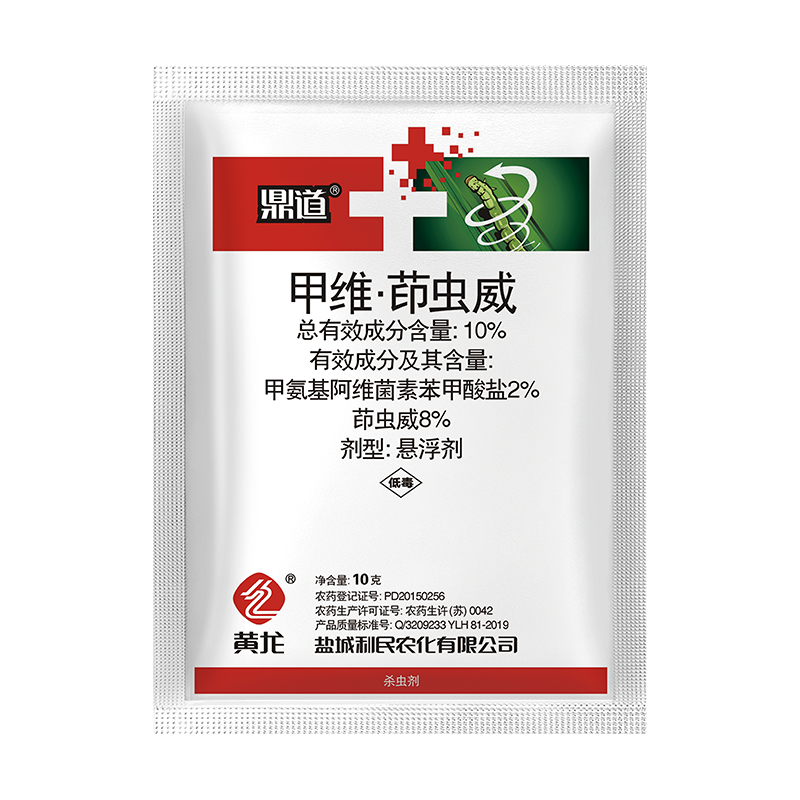 Emamectin Benzoate and Indoxacarb Synergistic Insecticide SCThis low-toxic suspension concentrate combines emamectin benzoate and indoxacarb for rice leaf roller control. Its rapid feeding cessation and long-lasting activity make it a relevant choice when planning spray intervals around pest life cycles.View Product →
Plant growth regulators are often grouped with pesticides, but their logic is completely different. You are not killing a target; you are redirecting the plant's own growth process. Paclobutrazol and uniconazole, for example, inhibit gibberellin synthesis and slow shoot elongation. The desired response is achieved with one well-timed application, and a second application only makes sense if the first one was washed off, misapplied, or needed at a new stage of development.
Timing matters more than frequency for this product category. Prohexadione calcium is commonly applied once during the early vegetative phase of fruit crops, with a repeat allowed only under defined conditions of shoot regrowth. Thidiazuron, used in cotton defoliation programs, is applied once close to harvest, and applying it twice in the same season makes no agronomic sense. Flumetralin, used as a sucker-control agent in tobacco, is also a single-application approach. If a growth regulator is in your program, read the crop-specific section of the label before the calendar. The interval is not a matter of pest pressure; it is a matter of plant development.
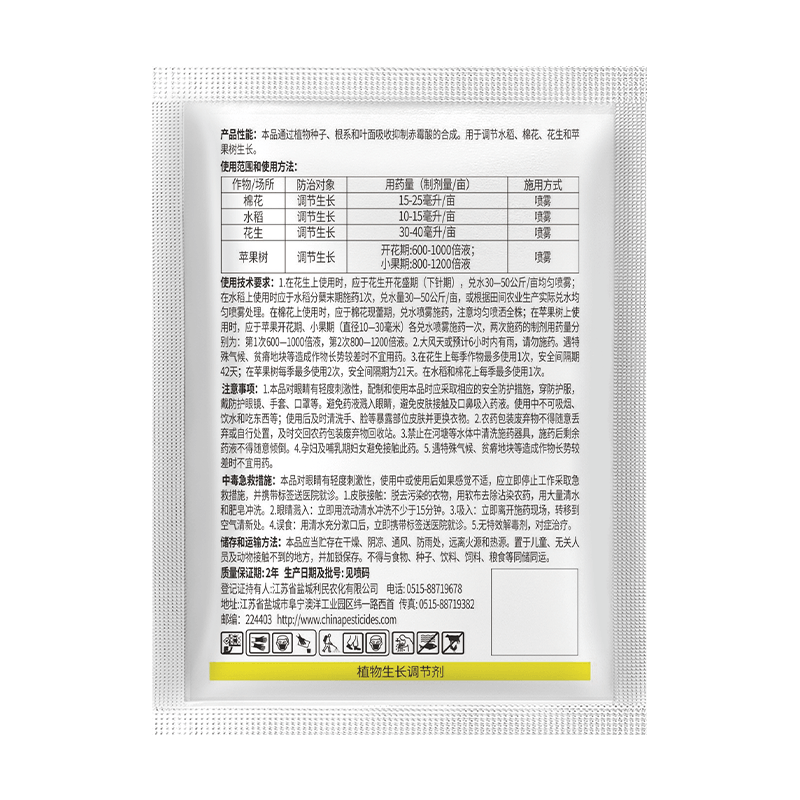 Prohexadione Calcium 10% SC Plant Growth RegulatorThis gibberellin biosynthesis inhibitor is designed for targeted growth regulation in rice. It suits growers who need a single, well-timed application to manage plant development without repeated treatments, aligning with the interval guidance discussed here.View Product →
A common mistake is treating plant growth regulators as a routine additive in every tank. That approach can lead to stunted plants, delayed maturity, or inconsistent results. For most crops, the correct frequency is the phrase you will hear from agronomists repeatedly: apply once, at the right stage, with the right rate, and then evaluate the response before considering another application. Monitoring plant response after a growth regulator is more useful than any predetermined interval.
The only reliable way to know whether an interval is too long or too short is to look at the crop. A good scouting routine is worth more than any table of interval ranges. Check the field or greenhouse at least twice a week during periods of active growth, and more often when weather conditions favor disease or when a pest is at a vulnerable stage. Look at the newest growth, the underside of leaves, the crowns, and the soil line. Keep a record of what you find, because pest pressure is not a memory; it is a number that changes every few days.
Thresholds anchor the decision. Economic injury is the point at which the pest population is large enough to cause damage that is worth preventing with a spray. Many agronomic programs publish action thresholds for common pests, and the interval concept becomes simple: if the population is below threshold, the correct action is "not yet." If the population is at or above threshold, the correct action is "now," followed by the label's minimum interval before any reapplication. A working understanding of thresholds separates a pest-management decision from a calendar habit.
For growers who want a deeper background on how raw active ingredients become the products they spray, and why some formulations act longer than others, a useful starting point is a crop-protection framework that explains the chain from technical chemistry to field use. Understanding what is inside the jug makes you better at judging what the interval should be. The more you know about the product, the less reliant you are on a generic weekly reminder.
You can explore that background in our complete guide from raw actives to global crop protection, which covers how technical grades, formulations, and application patterns fit together.
No article, agronomist, or supplier recommendation overrides the label. The label specifies the minimum reapplication interval, the maximum application rate per season, the pre-harvest interval, and the restricted re-entry interval. These are not optional suggestions. The minimum reapplication interval tells you how soon the product may be applied again without risking crop injury. The maximum seasonal rate tells you how many applications are allowed in a single growing season. The pre-harvest interval tells you how many days must pass between the last spray and the moment the crop can be harvested. The re-entry interval tells you when people can safely enter the treated area after a spray.
Each of these numbers affects frequency. A product with a seven-day minimum interval may still be applied only three times per season because of the seasonal rate cap. A product with a 21-day pre-harvest interval cannot be used near harvest even if pest pressure is rising. Many growers plan their spray program backwards from the pre-harvest interval, deciding in advance which products can be used early, in the middle, and late in the season. When you are tempted to tighten the interval because pest pressure is intense, the label is the boundary that keeps you legal and keeps residues within limits.
It is also wise to keep the product label or a digital copy of it in the sprayer cab. The interval you remember from last year may have been updated, or the product may have been registered for a new crop with a different interval. Reading the label again before every batch, even for a product you know well, is a small habit that prevents large mistakes.
A useful spray program starts with the season in front of you, not with a single pest sighting. Set a clean slate at planting or at the start of the season: maintain healthy soil, choose resistant varieties where possible, and use clean seed or cuttings. Then plan the season in blocks that match the crop's growth stages, because each stage has different pest and disease risks.
| Crop stage | Typical focus | Interval logic |
|---|---|---|
| Seedling and transplant | Damping-off, early aphids and thrips | Preventive fungicide at planting or first irrigation; no fixed repeat until risk is confirmed |
| Vegetative growth | Foliar disease, young sucking pests | Scout twice weekly; spray when thresholds are reached at 7-14 day intervals |
| Flowering and fruit set | Blossom blight, caterpillars, mites | Protect the flowers; intervals shorten during warm, wet weather and pest peaks |
| Fruit maturation | Powdery mildew, fruit rot, late pests | Follow the pre-harvest interval closely; the last application is a date, not a guess |
Records matter. Write down the date, the crop stage, the product, the rate, the water volume, the weather, and the result of the next scouting visit. A record highlights patterns: which parts of the field always need an earlier spray, which products hold longer in your climate, and which intervals are sustainable over a season. Over two or three seasons, the records replace guesswork with something close to a field-tested standard.
Finally, talk to your supplier before the season starts. A manufacturer that produces both active ingredients and formulations can explain which products are designed for long residual control, which are meant for quick knockdown, and how each should be rotated. That kind of conversation is more useful than any generic table, because it connects the chemistry to your specific crop and weather.
There is no single number that answers the question "how often should you use pesticides on plants?" The honest answer is: as often as the pest, the weather, and the label require, and no more. In practice, that means protectant fungicides every 7 to 10 days in wet conditions, systemic fungicides every 10 to 21 days under moderate pressure, contact insecticides when the target is present, systemic insecticides less often but with rotation, and growth regulators once at the right stage. Scouting supplies the dates; the label supplies the limits; the weather supplies the urgency.
If you are rebuilding a spray schedule, or simply questioning an old habit, start with the crop and the field. Know which pests and diseases are actually present, which growth stage is vulnerable, and which products deserve a place in the program. The growers who ask about intervals get better answers when they also ask about thresholds, modes of action, and residual behavior. That is the difference between spraying on a schedule and spraying with a strategy.
Yancheng Limin Chemical Co., Ltd., a pesticide manufacturer with over four decades of experience in technical and formulated products, works with growers, distributors, and formulation partners on exactly these decisions. Whether the question is a fungicide interval on a greenhouse crop or an insecticide rotation for field vegetables, understanding who is behind the product helps. You can learn more about the company's history and capabilities on our about page.
Contact info.
 Tel: +0086(515)88719699
 Phone: +86-18261226148
 E-mail: limin@chinapesticides.com
 Add: 21F & 22F, Jinhang Fortune Building, No. 988 Luming Road, Yancheng City, Jiangsu Province, China
Im.&Ex. Departemt
Tel:+0086(515)88356821
E-mail:
lany@chinapesticides.comFollow Us
Copyright © Yancheng Limin Chemical Co., Ltd. All Rights
Reserved
 Wholesale Agrochemical Manufacturers