 EN
EN
 English
  中文简体
中文简体
Home / News / Industry News / What Is a Pesticide Formulation? Components, Types, and Practical Buying Insights
Industry News
Content
Open a label in any agrochemical warehouse and the first thing a new buyer reads is the name of the active ingredient. Ten minutes later, the same buyer is looking at a small suffix — EC, SC, WDG, EW, WP — and asking whether it matters. It matters a great deal. The formulation of a pesticide decides how easily the product pours, how it behaves in a spray tank, how long it stays stable on the shelf, and how reliably it reaches the target pest.
A pesticide formulation is the finished, usable product form of a crop protection active substance. It is a carefully engineered mixture in which the active ingredient is combined with inert materials so that the product can be stored, measured, diluted, sprayed, and delivered with predictable performance. Technical-grade chemistry almost never leaves the factory as pure powder; formulation is the step that turns a raw chemical into a practical agricultural tool.
This article explains what a pesticide formulation is, what goes into it, how manufacturers design it, and what the differences between the common formulation types mean for growers, distributors, and procurement teams.
A pesticide formulation is a mixture of a technical active ingredient with one or more inert ingredients, processed so that the product can be applied effectively and safely. The active ingredient is the chemical that actually inhibits, repels, or kills the pest. Everything else in the formulation exists to support it.
Formulation exists because a raw active ingredient, as it comes out of a synthesis plant, is rarely suitable for direct use. It may be a fine crystalline powder that is difficult to measure, prone to drifting, or unstable in water. It may be a viscous oil that cannot be poured accurately or mixed into a spray tank. It may degrade quickly under sunlight. Formulation solves these problems by changing the physical state, the particle size, the solubility, and the release behavior of the active ingredient.
The classic list of formulation objectives, still valid after decades of practice, contains five items: improve storage, improve handling, improve application, improve effectiveness, and improve safety. A well-designed formulation balances all five. A poor one might be cheap to produce but fail on suspensibility, foam excessively in the tank, or cake in the pack after one hot season in the warehouse.
Formulation codes are a form of shorthand for all of this. When a label reads "EC" or "WDG," an experienced buyer immediately infers storage behavior, tank behavior, and even exposure risk. Learning that shorthand takes time, but the investment pays off at the moment of purchase.
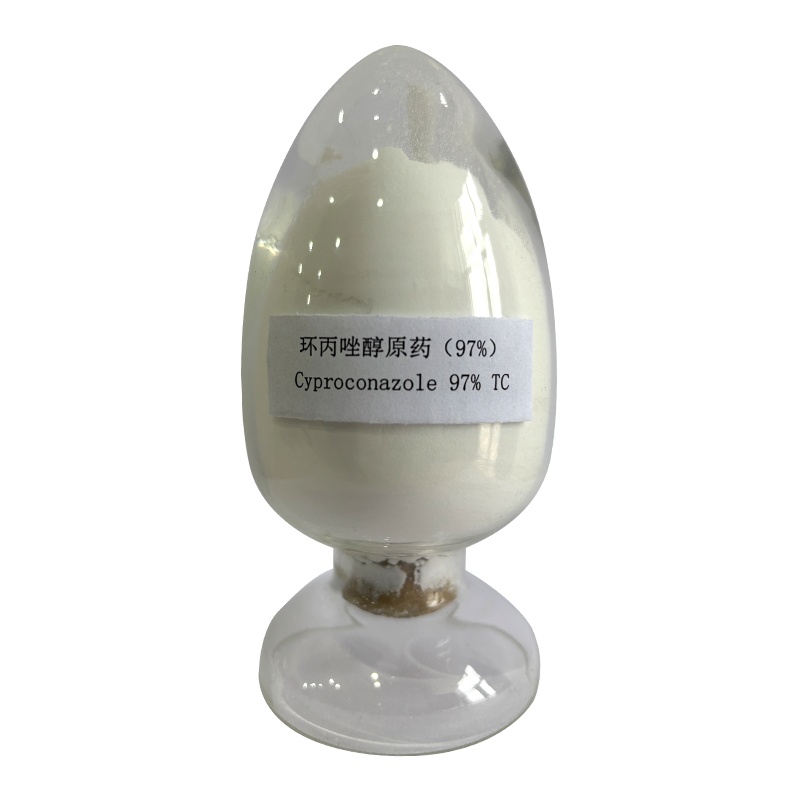
In the pesticide trade, the difference between a technical grade and a formulation is fundamental. A technical is the concentrated active ingredient in its basic form, typically 90 percent or higher purity, and is used as raw material for manufacturing formulations. The formulation is what reaches the end user. A manufacturer may produce tebuconazole technical at 97 percent purity and use it to make a 20 percent suspension concentrate, a 30 percent emulsion, or a water-dispersible granule.
This distinction also matters commercially. Buying a technical requires chemical handling knowledge, blending capability, and registration flexibility. Buying a finished formulation requires attention to application performance, packaging, and local registration. Each step down the chain adds value but also adds the responsibility of quality control.
Every formulation contains two broad categories of material: the active ingredient and the inert ingredients, often called co-formulants.
The active ingredient (AI) is the component that actually controls the pest. It is present at a defined concentration stated on the label, either as a percentage by weight, for example 25% SC, or as weight per volume, for example 450 g/L SC. The way the concentration is expressed reflects how the product is measured by the user. Liquids sold by volume use g/L; powders and granules sold by weight use percentages.
Inert ingredients contribute no pesticidal action themselves, but they determine whether the formulation behaves correctly in the tank and on the leaf. They include carriers, solvents, surfactants, emulsifiers, dispersants, wetting agents, stabilizers, antifoaming agents, preservatives, dyes, and pH buffers.
The word "inert" is often misunderstood as harmless. In reality, some inert carriers and solvents have toxicological relevance of their own, which is why many importing countries require disclosure of co-formulants and why serious buyers request a safety data sheet for every component, not only for the active ingredient.
| Function | What it does in the product | Typical example |
|---|---|---|
| Carrier or diluent | Carries the active ingredient and increases the bulk volume | Kaolin clay, diatomaceous earth |
| Solvent | Dissolves the active ingredient into a liquid phase | Aromatic hydrocarbons, vegetable oils |
| Emulsifier | Allows oil and water to form a stable emulsion | Calcium dodecylbenzene sulfonate |
| Dispersant | Keeps solid particles separated in suspension | Alkyl naphthalene sulfonate |
| Wetting agent | Helps powders and granules wet out quickly in water | Alcohol ethoxylates |
| Stabilizer | Protects the active ingredient from hydrolysis or oxidation | Epoxidized soybean oil |
| Antifoaming agent | Controls foam during mixing | Silicone compounds |
| Preservative | Prevents microbial spoilage of water-based products | Isothiazolinone derivatives |
| pH buffer | Keeps the spray solution in a stable pH range | Citrate salts |
Adjuvants deserve a separate mention. An adjuvant is a substance that modifies the behavior of a spray solution or deposit. Some adjuvants are already built into the formulation. Others are added by the grower into the spray tank. Built-in adjuvants are convenient because the grower does not need to measure them, but they cannot be optimized for every local water chemistry. A tank-mix adjuvant gives flexibility, but it can also introduce a new incompatibility. The most reliable approach is to start with a well-designed formulation and then select tank-mix adjuvants only when the situation demands them.
Designing a formulation begins long before the production line. The formulator starts with the physical and chemical profile of the active ingredient and moves outward to the conditions in which the product will be used.
Every decision creates a trade-off. A solvent-rich emulsifiable concentrate may be cheaper to produce but more phytotoxic to sensitive crops, more flammable in storage, and less welcome in warehouses with strict fire codes. A water-based suspension concentrate avoids organic solvents but requires high-quality milling and continuous agitation to remain stable. There is no single best formulation type, which is why the same active ingredient is often sold in several different forms by the same manufacturer.
Most large manufacturers deliberately maintain several formulation platforms for the same active ingredient. A supplier may sell a tebuconazole EW for distributors who prefer low solvent content, a WDG for large farms with dust concerns, and a technical grade for industrial customers who will do their own formulating. Understanding this logic helps buyers request the right product instead of simply the familiar code.
Registration also shapes formulation development. Regulatory review takes into account not only the active ingredient but also the co-formulants, the impurities they introduce, and the residues they leave. A change in solvent or surfactant can trigger new residue studies. This is why formulators are cautious about changing recipes once a product is registered, and why buyers should be suspicious of very cheap imitations that may have copied the label while ignoring the regulatory science.
Liquid formulations are the most diverse group on the market. They share one advantage: they are easy to measure, pour, and pump into a spray tank. They differ in how the active ingredient is carried and in how they behave when diluted.
If the active ingredient dissolves completely in water, the simplest formulation is a soluble concentrate (SL). It forms a true solution, no particles remain, and there is no settling to worry about. The downside is that many active ingredients cannot be dissolved at high enough concentration to make an SL economical.
An emulsifiable concentrate (EC) holds the active ingredient dissolved in an organic solvent, with emulsifiers added. When poured into water, the concentrate forms tiny oil droplets dispersed through the water, producing a milky liquid. EC formulations are widespread because they tolerate many active ingredients and are comparatively inexpensive to produce. Their drawbacks include solvent odor, flammability, and occasional phytotoxicity on sensitive crops.
An oil-in-water emulsion (EW) suspends the oily active phase as droplets in water, instead of dissolving it in a large volume of solvent. This reduces the amount of volatile solvent compared with an EC. Microemulsions (ME) are transparent, thermodynamically stable systems with very small droplet sizes. Suspo-emulsions (SE) combine suspended solid particles with an emulsified oil phase, useful for mixtures where one active dissolves in oil and another is a solid suspension.
A suspension concentrate (SC), often called a flowable, is a dispersion of finely milled solid active ingredient in water. Particle sizes are typically in the low micrometer range, kept in suspension by dispersants and thickeners. SC products have become dominant in modern crop protection because they are water-based, avoid organic solvents, and provide excellent availability of the active ingredient on the leaf.
The quality of an SC depends heavily on particle-size distribution and viscosity. A well-milled SC with a narrow particle-size distribution remains suspended longer, passes through fine nozzles without clogging, and releases the active ingredient at the right rate on the leaf. An unstable SC settles into a hard cake that cannot be re-suspended, which leads to uneven doses across the field. This is why experienced buyers ask for suspensibility and particle-size data rather than trusting the label alone.
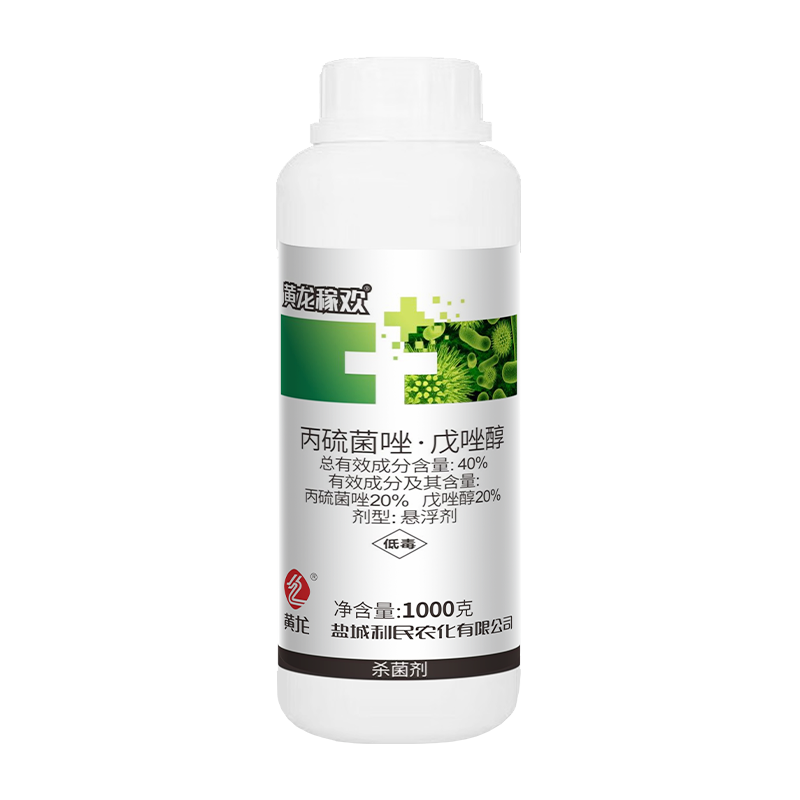
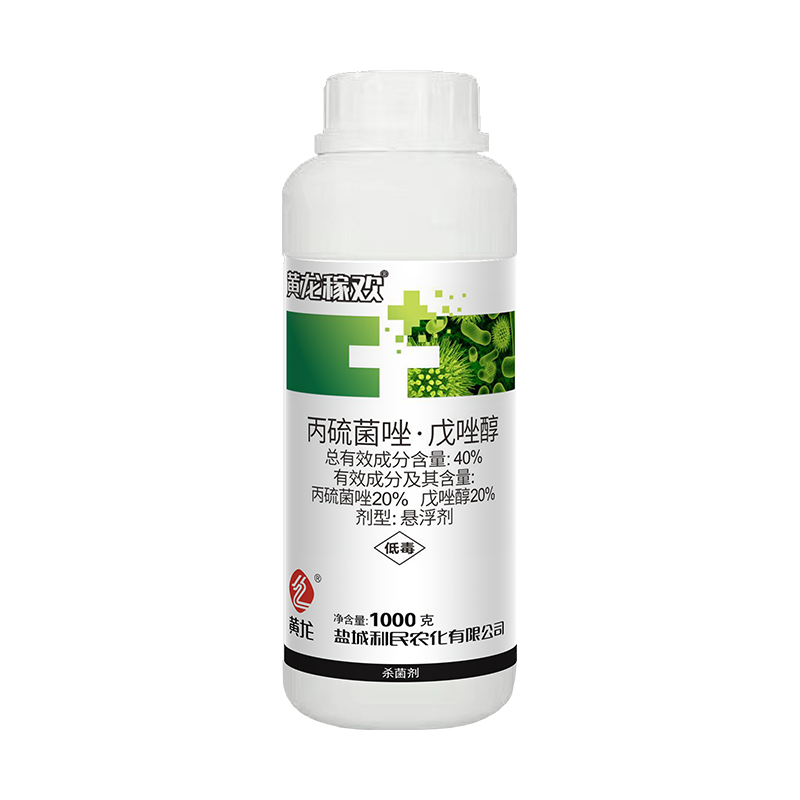 Prothioconazole 20% and Tebuconazole 20% SC FungicideCo-formulated suspension concentrate with 20% prothioconazole and 20% tebuconazole for wheat scab and powdery mildew. Its suspensibility and particle-size distribution are decisive for even dosing, making it a key product for formulation quality evaluation.View Product →
One practical example of a modern SC is a co-formulated fungicide containing prothioconazole and tebuconazole at 20 percent each. The two active ingredients are milled together with carefully selected dispersants and stabilizers so that the product remains uniform through storage and dilutes evenly into a spray tank. Co-formulations like this do not simply mix two labels together; they require compatibility testing, physical stability work, and a balanced toxicological package before they are launched.
Ultra-low-volume (ULV) formulations are designed to be applied undiluted, or with very small amounts of water, through specialized spraying equipment. Aerosols are pressurized products used for small-scale household and stored-product pest control. Both niches are far smaller than the mainstream EC, SC, and WDG markets, but they show the range of physical forms that formulation technology can produce.
| Code | Full name | Key characteristics | Dilution before use |
|---|---|---|---|
| SL | Soluble concentrate | True solution in water | Usually yes |
| EC | Emulsifiable concentrate | Solvent solution forming a milky emulsion | Yes |
| EW | Oil-in-water emulsion | Water-based emulsion, low solvent content | Yes |
| ME | Microemulsion | Transparent, thermodynamically stable system | Usually yes |
| SC | Suspension concentrate | Milled solid particles suspended in water | Yes |
| OD | Oil dispersion | Solid particles suspended in oil | Yes |
| SE | Suspo-emulsion | Combination of suspension and emulsion | Yes |
| ULV | Ultra-low volume | Applied almost undiluted with special equipment | No or minimal |
Dry formulations were once dominated by simple dusts and wettable powders. Modern dry forms have shifted toward cleaner, safer, and more precise products that still keep logistics simple.
A wettable powder (WP) contains the active ingredient on a carrier such as clay, together with wetting agents and dispersants. When added to water, the powder must wet quickly and form a stable suspension. Wettable powders are inexpensive and easy to produce, but they generate dust during pouring, and the suspended particles can settle in the tank if agitation is poor. Exposure to powder dust remains a real concern for operators, especially in small-scale agriculture where measuring is done by hand.
Water-dispersible granules (WDG or WG) solve the main weakness of wettable powders by converting the same powder recipe into free-flowing granules. Instead of fine dust, the operator pours granules, which greatly reduces airborne exposure. In the tank, the granules disintegrate within a minute or two into a suspension that behaves well under normal agitation. High-load WDG products are increasingly preferred by large farms and professional distributors because they combine clean handling with low shipping weight per dose.
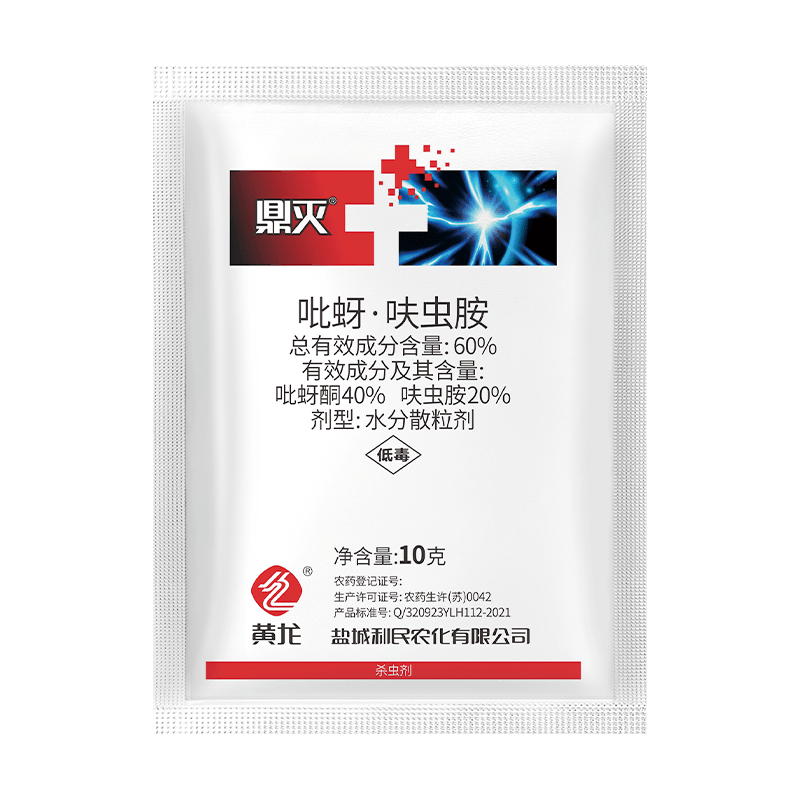
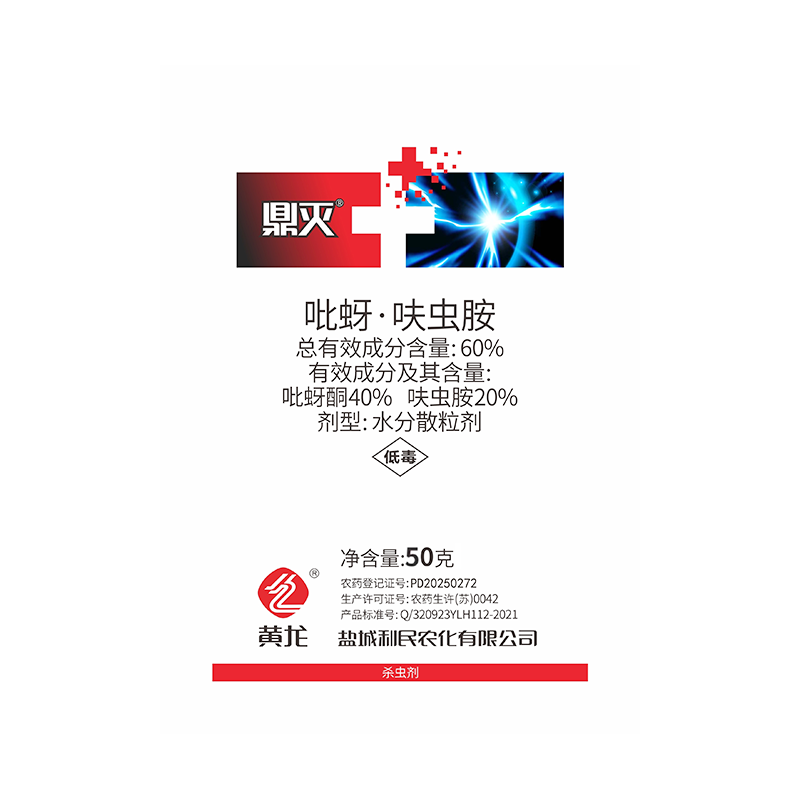 60% Pymetrozine and Dinotefuran WDG InsecticideHigh-load water-dispersible granule insecticide combining 40% pymetrozine and 20% dinotefuran for rice planthopper and other sucking pests. The granule form reduces dust exposure and shipping weight, aligning with professional demand for clean, concentrated formulations.View Product →
An insecticide WDG containing pymetrozine and dinotefuran at a combined active content of 60 percent is a good illustration. Such a high load keeps the pack size small and cuts transport and storage costs per hectare. The granule form protects the operator during measuring, and the dispersants keep the particles suspended long enough for a full spray pass. The same design logic appears across fungicide and insecticide portfolios from experienced manufacturers.
If the active ingredient is soluble in water, a soluble powder (SP) is the simplest dry option. It dissolves into a true solution, avoiding suspensions entirely. Soluble powders are convenient but limited to active ingredients with high water solubility.
Granules (G) are coarse dry particles applied directly to soil, water surfaces, or plant bases, commonly used for soil insects and certain herbicides. Pellets are heavier and more uniform, often used for snail control or forestry applications. Dusts (D) are low-concentration powders applied dry, but their use is shrinking because of drift and operator exposure. Baits combine a food attractant with a low concentration of active ingredient and are used for ants, cockroaches, slugs, and rodents.
Microencapsulation wraps tiny droplets or crystals of active ingredient in a polymer shell. The shell controls the release rate, shields the active ingredient from UV degradation, and reduces dermal and inhalation toxicity. Capsule suspensions (CS) are widely used for slow-release insecticides and for active ingredients with strong irritant effects.
Water-soluble packets (WSB or WSP) are pre-measured doses of a wettable powder, suspension concentrate, or soluble product inside a film that dissolves when added to the spray tank. They eliminate the need to measure and pour concentrates, reduce operator contact, and prevent spillage. Many professional markets now require this format for high-toxicity products, and its use is growing steadily.
| Code | Full name | Key characteristics | Dilution before use |
|---|---|---|---|
| WP | Wettable powder | Dusty powder forming a suspension | Yes |
| WDG/WG | Water-dispersible granule | Granule dispersing into a suspension | Yes |
| SP | Soluble powder | Powder dissolving into a true solution | Yes |
| G | Granule | Coarse particles applied dry | No |
| D | Dust | Fine dry powder applied directly | No |
| B | Bait | Attractant plus low-dose active | No |
| CS/ME | Capsule suspension / microencapsulated | Polymer shell controlling release | Usually yes |
| WSB/WSP | Water-soluble packet | Pre-measured dose in dissolving film | Yes |
The most obvious differences between formulations appear the moment a product meets water and leaves the nozzle.
Wettability is the first requirement. If a powder or granule floats on the surface and fails to wet, the operator cannot mix a uniform batch. Dispersibility matters next: particles must separate and remain distributed through the spray tank for the entire spraying session. When dispersion fails, the first pass delivers a concentrated dose and the last pass delivers a nearly empty tank, with predictable damage to the crop and poor pest control.
On the leaf, the formulation controls spreading, retention, and evaporation. A well-designed product forms a uniform deposit of droplets that stick to waxy leaf surfaces instead of beading and rolling off. Rainfastness, or the ability of the deposit to resist wash-off after rain, depends partly on adjuvants and film-forming agents in the formulation. The active ingredient's stability on the leaf under strong sunlight can also be improved by photoprotective ingredients or encapsulation.
Drift is another field behavior tied to formulation. The droplet-size spectrum produced by a nozzle is affected by the surface tension, viscosity, and evaporation rate of the spray liquid, all of which the formulation influences. Some formulations are deliberately designed to produce coarser droplets that stay closer to the target, which is particularly relevant near water bodies and residential areas.
For systemic products, formulation directly affects penetration into the leaf, translocation inside the plant, and release rate. This is why two products carrying the same active ingredient at the same declared concentration can perform differently in the same field; the difference sits in the formulation, not in the label.
Particle size is the hidden variable in powders, granules, and suspensions. Smaller particles expose more surface area per unit weight, which can improve dissolution and biological availability. But particles that are too fine can cause caking, dustiness, or difficult handling. Modern manufacturers measure particle-size distribution with laser diffraction and hold it inside tight internal limits; those limits are part of the quality contract between the factory and the field.
For a plant growth regulator such as prohexadione-calcium, particle size and suspensibility decide whether the growth-regulating effect appears evenly across an orchard. If the product has settled or was poorly formulated, some trees receive a full dose and others almost none, showing up weeks later as uneven shoot growth.
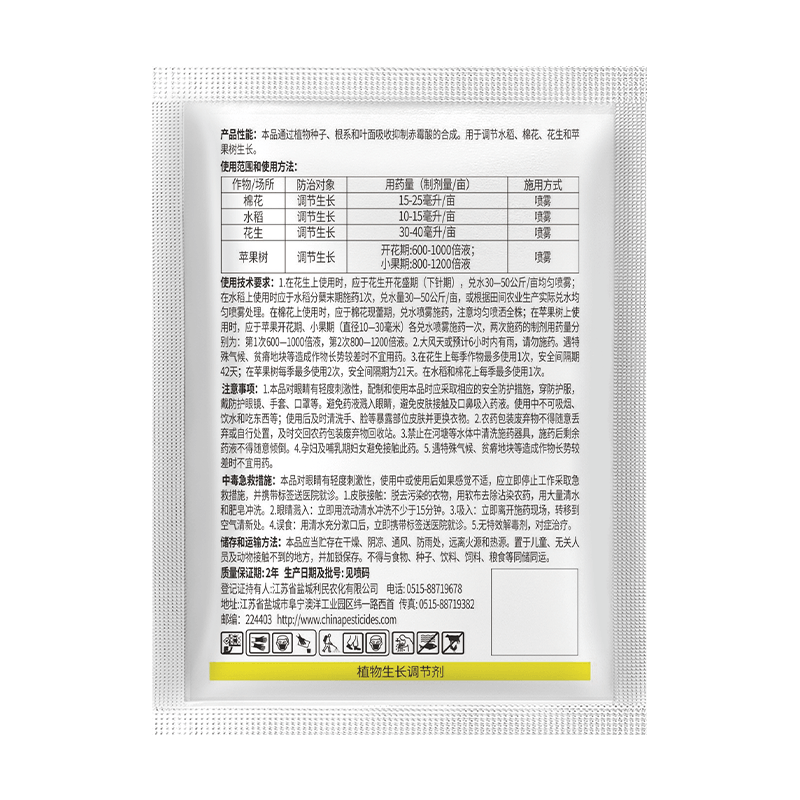 Prohexadione Calcium 10% SC Plant Growth RegulatorSuspension concentrate growth regulator with 10% prohexadione calcium, used for rice growth regulation by inhibiting gibberellin synthesis. Consistent field response depends on suspensibility and particle size, underscoring the importance of physical stability in evaluation.View Product →
This is the practical reason that formulation quality audits matter. When a buyer checks an SC product, the relevant questions are not limited to the percentage of active ingredient. Suspensibility after a standard settling test, particle-size distribution, viscosity at field temperature, and persistent foam all belong in the evaluation.
Few growers spray a single product alone through a season. A single tank pass often contains a fungicide, an insecticide, a foliar nutrient, and a surfactant. Every additional product raises the risk of incompatibility.
Physical incompatibility produces visible symptoms: precipitation, flocculation, layer separation, or clumps that block screens and nozzles. Chemical incompatibility is easier to miss because it is often invisible. Alkaline tank water can hydrolyze some active ingredients within minutes, destroying the dose before the spray leaves the nozzle. Chelation with hard-water ions can bind certain products into forms the plant cannot absorb.
Formulation choice changes the risk profile. Emulsifiable concentrates and wettable powders are more sensitive to water quality than SC and WDG products with modern dispersant systems. This is one reason the shift towards SC and WDG has been so consistent in professional agriculture.
Before using a new tank mixture at field scale, run a jar test. Fill a clean glass jar with the water you will actually use, add the products in the recommended order, close the lid, and invert it several times. Observe the mixture for thirty minutes and again after an hour. If it separates quickly, forms flecks, or develops a creamy layer that will not re-suspend when shaken, the combination is incompatible in that water.
Compatibility agents and buffering products exist for difficult water conditions, but they add cost and another variable. In most cases, selecting a formulation with strong dispersant and buffer systems built in is simpler than relying on dozens of tank-mix additives. Professional suppliers include mixing guidance on their labels and technical sheets, and responsible distributors pass that guidance to growers.
Manufacturers reduce compatibility risk in three ways. First, they choose co-formulants that behave predictably over a wide range of water chemistries. Second, they publish mixing-order guidance for their own products. Third, they provide technical service that helps distributors diagnose compatibility problems before they reach the field. A supplier that cannot answer a straightforward tank-mix question is a supplier to be cautious about.
A formulation is only as good as the discipline of the plant that makes it. Batch-to-batch variation in particle size, viscosity, pH, or active content translates directly into variable field performance and financial losses for the buyer.
Key quality parameters differ by formulation family. For liquid products, the standard set includes active content, pH, viscosity, persistent foam, and accelerated storage stability. Suspension concentrates add particle-size distribution and suspensibility as critical measures. Powders and granules are checked for wetting time, dispersibility, and dust content. Emulsion products are tested for emulsion stability in hard and soft water under laboratory conditions.
Accelerated storage tests simulate hot and cold cycles to predict shelf life. A product that survives heat cycling without caking, cracking, or separating will usually remain serviceable through several years of warehouse storage. Buyers should ask for certificates of analysis and stability data before approving a new source.
Vertically integrated manufacturers hold a clear advantage in this area. When one company controls the intermediate, the technical active ingredient, and the formulation step, quality problems are traced quickly and fixed at the source instead of being negotiated across commercial boundaries. That is why it is worth evaluating a supplier's whole production chain rather than only the finished bottle.
Yancheng Limin Chemical, for example, operates across pesticide intermediates, technical active ingredients, and finished formulations from production bases in Jiangsu and Liaoning. The company has built its reputation over four decades on exactly this kind of integration. Readers who want to see how raw active chemistry flows into finished crop protection products can follow this guide from raw actives to global crop protection.
The formulation code on a label summarizes the physical type of the product, and the number beside it states the active content. "Prothioconazole 20% + tebuconazole 20% SC" tells a buyer that every portion of product contains two active ingredients at 20 percent each in a suspension concentrate. Reading this correctly is the starting point for comparing products from different suppliers.
Registration is the legal foundation of any pesticide. Countries require national registration for each product, which typically covers the formulation, the label, the analytical methods, and the residue data. Importers should request the registration certificate, the approved label, and the safety data sheet before committing to a new supplier. FAO/WHO specifications for pesticide formulations provide an internationally recognized baseline for purity limits, physical properties, and packaging, and many serious buyers reference them in their supplier qualification protocols.
Labels also communicate operator protection requirements. Signal words such as "Caution," "Warning," and "Danger" reflect the toxicity of the whole formulation, not only the active ingredient. That is another reason co-formulants matter: an inert solvent can increase the signal word just as easily as the active ingredient can.
It is also worth checking the country of manufacture and the plant's own quality certifications. A formulation manufactured in a facility with documented quality systems and a clean audit history is a different product, in risk terms, from the same formula produced in an un-audited plant.
Selection should start from the application scenario, not from habit. The most common mistake is to reorder the same formulation code for years without questioning whether it still matches the equipment, water, and pest situation.
Portfolio breadth is a signal of competence. A manufacturer that offers many formulation types is better placed to recommend an honest fit than one that only makes a single type. Yancheng Limin's finished pesticide formulation catalog spans fungicides, insecticides, and plant growth regulators across SC, WDG, WP, EW, and EC forms, which gives procurement teams a practical basis for comparison.
Finally, consider the commercial relationship. A formulation is a manufactured product, and its consistency sits inside a longer supply chain of intermediates, technicals, packaging, and logistics. Buyers who qualify their suppliers on technical data, registration status, and production discipline get fewer field complaints and fewer lost seasons than buyers who qualify only on price.
A pesticide formulation is not an afterthought to the active ingredient; it is the active ingredient made practical. The choice of formulation type determines how a product is stored, measured, mixed, sprayed, and finally delivered to the pest. For buyers, learning to read a formulation code and understanding what lies behind it is one of the fastest ways to reduce field failures and procurement mistakes.
When evaluating suppliers, compare more than active content. Ask for suspensibility, particle-size, and storage stability data. Verify registration documents and safety data sheets. Look at whether the manufacturer controls its own technical and intermediate production, and check its history of consistent supply. These details tell you, more reliably than any brochure, whether the bottle in your hand will do the job in the field.
Contact info.
 Tel: +0086(515)88719699
 Phone: +86-18261226148
 E-mail: limin@chinapesticides.com
 Add: 21F & 22F, Jinhang Fortune Building, No. 988 Luming Road, Yancheng City, Jiangsu Province, China
Im.&Ex. Departemt
Tel:+0086(515)88356821
E-mail:
lany@chinapesticides.comFollow Us
Copyright © Yancheng Limin Chemical Co., Ltd. All Rights
Reserved
 Wholesale Agrochemical Manufacturers