 EN
EN
 English
  中文简体
中文简体
Home / News / Industry News / Which Liquid Pesticide Formulation May Approach 100% Active Ingredient?
Industry News
Content
If a procurement team asks which liquid pesticide formulation can approach 100% active ingredient, the honest answer is that few registered end-use liquids reach that level. The closest practical candidates are ultra-low-volume (ULV) formulations, technical concentrates used as manufacturing inputs, and a narrow group of high-load soluble liquids (SL) or emulsifiable concentrates (EC) built around liquid technicals. A conventional EC, SL, SC, EW, or ME normally contains solvents, surfactants, water, thickeners, or antifreeze, so the active ingredient (AI) usually sits between 20% and 80% by weight. The “100% AI” figure belongs more often to the technical material itself than to the diluted spray that reaches a field.
Among liquid formulations that a grower or applicator might actually handle, ultra-low-volume (ULV) products are the best-known route to very high AI loads. ULV formulations are designed for undiluted or minimally diluted application, often by aerial or controlled-droplet equipment. They may contain 80–95% AI, and some liquid technicals can be applied at close to 100% AI if the molecule itself is an oil and the label permits it.
Technical concentrates (TC or TK) are the other clear case. These are not ordinary field formulations. They are concentrated active ingredients, often 90–98% pure, used to manufacture end-use products or to prepare tank mixes under strict industrial controls. A technical concentrate can be a liquid, a waxy solid, or a low-melting solid, depending on the molecule. When the technical is a liquid at ambient temperature, a supplier may quote an AI content that approaches 100%, but that number describes the raw material, not a ready-to-spray product.
For normal agricultural spraying, the answer is therefore: ULV liquids and liquid technical concentrates may approach 100% AI; conventional EC, SL, SC, and EW products do not. If the question is about a packaged, label-compliant spray formulation sold to farmers, the realistic ceiling is usually far lower because inert ingredients are needed for stability, safety, and accurate dosing.
An active ingredient is the molecule that controls the pest, disease, or weed. It must be dissolved, suspended, emulsified, or otherwise delivered in a way that lets the applicator measure it, mix it, spray it, and keep it stable on the shelf. Each of those functions requires inert ingredients: solvents, emulsifiers, dispersants, antifoam agents, thickeners, pH buffers, and sometimes antifreeze. Those materials add volume and mass, so the AI percentage falls.
A technical grade material may be 97% pure, meaning 97% of the material is the active molecule and the rest is manufacturing impurities. That is a purity figure. A formulated product’s AI content is a different number: grams of active ingredient per kilogram or per litre of finished product. A 97% technical can be used to make a 25% EC or a 50% SC. The formulation, not the technical purity, determines the AI load in the jug.
If an AI is a solid at room temperature, a liquid formulation must either dissolve it at high concentration or suspend it as fine particles. Solubility limits how much can be dissolved. Suspension concentrates typically max out around 40–60% AI because higher loads become too viscous or settle during storage. Emulsifiable concentrates can reach 70–90% AI in some cases, but they still need solvent and emulsifier. Only when the AI is itself a liquid and can act as its own carrier can the formulated liquid approach 100% AI.
The table below compares common liquid formulation families. The ranges are illustrative, not label guarantees. Always verify the registered specification because individual products vary by active ingredient, crop, and market.
| Formulation type | Typical AI content | Carrier and key inerts | Can approach 100% AI? |
|---|---|---|---|
| EC — emulsifiable concentrate | 20–80% | Organic solvent, emulsifiers | No, except special high-load liquid technicals |
| SL — soluble liquid | 20–70% | Water or polar solvent, surfactants | No, solubility and stability limit the load |
| SC — suspension concentrate | 20–60% | Water, dispersants, thickeners, antifreeze | No, viscosity and settling limit the load |
| EW — emulsion, oil in water | 10–50% | Water, oil phase, emulsifiers | No, water phase adds substantial mass |
| ULV — ultra-low volume | 80–95%+ | Minimal solvent or no diluent | Yes, in suitable liquid technicals |
| TC/TK — technical concentrate | 90–98% purity | Manufacturing input, not field-ready | Yes, but not a normal end-use formulation |
The practical lesson is that a high AI percentage is not automatically better. A 95% ULV product may require specialized application equipment and may pose greater operator exposure or phytotoxicity risk than a 40% SC. A 70% EC may be efficient to ship but harder to pour and measure. The right choice depends on the target, the sprayer, the label, and the handling controls.
ULV products are designed to be applied as fine droplets with little or no water. Because they carry little inert material, they can contain 80–95% AI or more. They are common in public health, locust control, and some row-crop or orchard programs where water is scarce or where very low spray volumes are required. The trade-off is that ULV formulations demand accurate calibration, appropriate nozzles, and strict attention to drift, volatility, and operator safety.
A technical concentrate is essentially the concentrated active ingredient before final formulation. It may be a liquid technical, a solution in a minimal solvent, or a stabilized melt. Many technicals are solids, such as tebuconazole or azoxystrobin, and they cannot be called liquid formulations. Others are liquids or low-melting materials, and those can be supplied at 90–98% AI. A manufacturer with technical synthesis capability, such as Yancheng Limin, may offer both high-purity technicals and the downstream formulations made from them. That distinction matters in procurement: a 97% TC is an input, while a 25% SC is an end-use product.
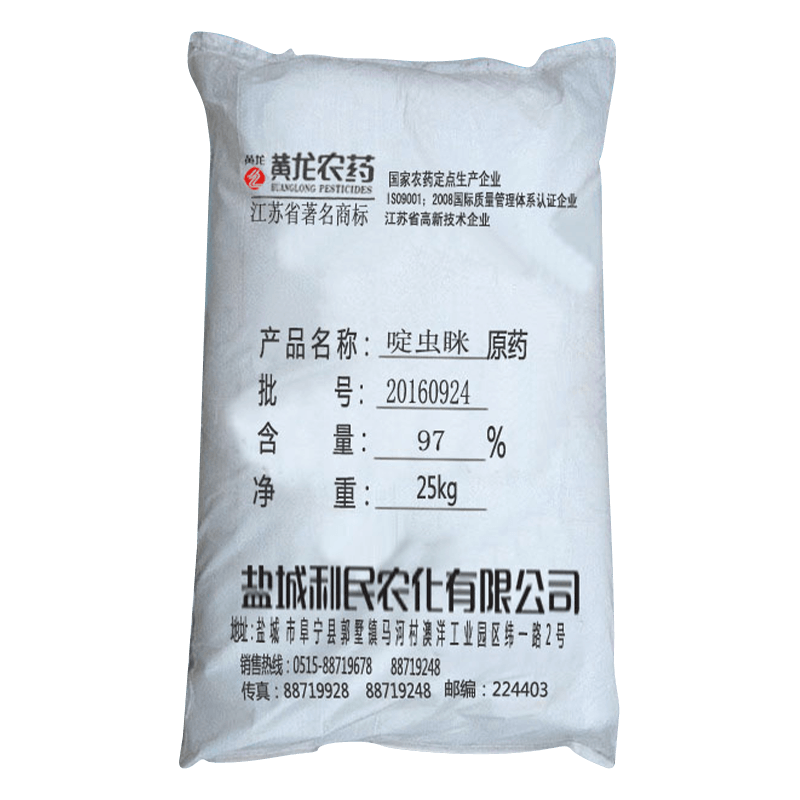 Acetamiprid 97% TC Technical Grade Insecticide Raw MaterialHigh-purity technical-grade raw material for pesticide formulations, not for direct crop use; useful when comparing near-100% active ingredient inputs.View Product →
For example, acetamiprid 97% TC is a high-purity technical grade material. It is not a finished liquid spray, but it sits at the top of the concentration scale that the question is really asking about. A formulator can use it to build lower-load liquid products, or a specialist applicator may handle it under industrial rules.
Some SL and EC products can reach the upper end of their ranges, especially when the AI is highly soluble or when the technical is itself a liquid. A 60–80% EC is possible with certain oil-soluble active ingredients, and a few SL products exceed 60% AI. Even so, they rarely approach 100% because solvent, emulsifier, or water must be present. If a supplier claims a normal EC or SL is “100% active,” check whether they mean 100% of the active ingredient is present as a specific isomer, or whether they are quoting the technical purity rather than the formulation content.
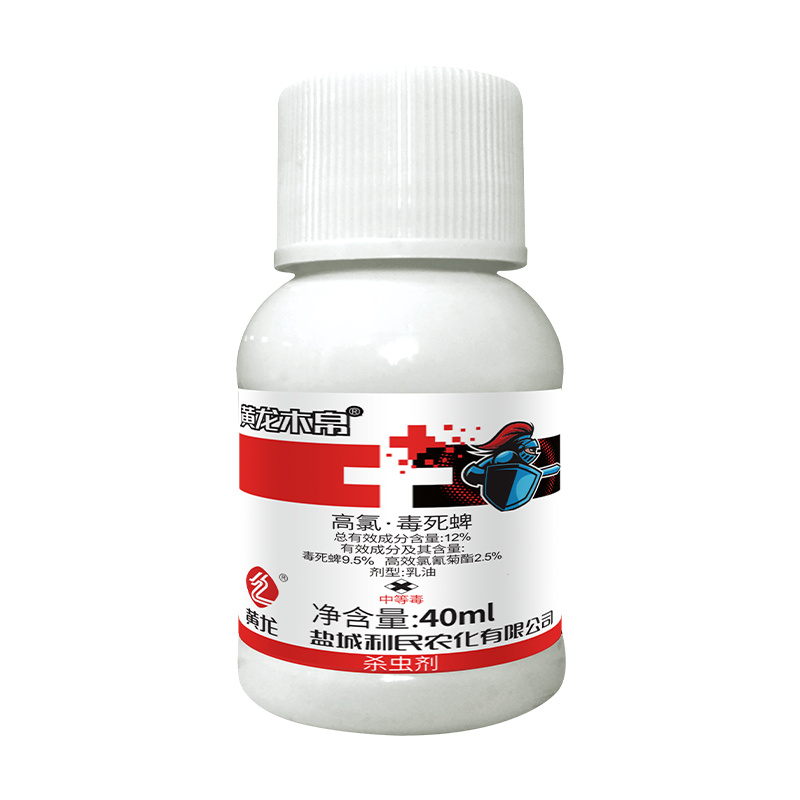 Beta-Cypermethrin 2.5% + Chlorpyrifos 9.5% EC Insecticide for Cotton BollwormRegistered liquid EC formulation for cotton bollworm, applied by even spray at peak egg hatching; shows the diluted end-use side of insecticide formulations.View Product →
An EC such as beta-cypermethrin 2.5% + chlorpyrifos 9.5% EC illustrates the opposite end of the scale: it is a liquid formulation, but the total AI load is only about 12%. It is designed for dilution and broad application, not for near-100% AI delivery.
Near-100% AI claims deserve scrutiny because they can hide several commercial and technical issues. The first is ambiguity: the seller may be quoting technical purity, AI content in the formulation, or the concentration of a stock solution before dilution. The second is fitness for use: a high-load liquid may be unstable at low temperature, corrosive to seals, or unsafe to measure with standard farm equipment. The third is regulatory mismatch: a product registered as a technical material cannot legally be sold as a ready-to-use field formulation without the appropriate end-use registration.
A high AI number can reduce freight and packaging costs, but it can also increase handling risk and reduce margin for mixing error. For small farms, a lower-load SC or EC may be safer and easier to measure. For large aerial or controlled-droplet programs, a ULV or high-load liquid may be the better technical fit.
Use a short checklist that separates chemistry from commerce. First, request the certificate of analysis for the specific batch. It should show AI content, impurity profile, moisture, and relevant physical properties such as pH, density, and emulsion stability. Second, ask for the CIPAC method or equivalent analytical method used to test the AI. Third, confirm the FAO/WHO specification if the product is traded internationally. Fourth, check whether the supplier can provide the technical grade and the end-use formulation, because that indicates control over the whole chain. A manufacturer with in-house technical synthesis and formulation, such as the one behind this pesticide formulation portfolio, can often explain whether a given AI is best supplied as a technical, an EC, an SC, or a ULV liquid.
That process prevents a common error: buying a high-load liquid because it sounds stronger, then discovering it cannot be legally applied, safely measured, or legally stored on the farm. The best formulation is the one that matches the pest, crop, sprayer, and regulatory environment.
If the goal is a normal agricultural spray, do not expect a packaged EC, SL, SC, or EW to approach 100% AI. Expect 20–80% AI, with exact limits set by solubility, stability, and the label. If the goal is a specialized ULV program, a high-load liquid or a liquid technical concentrate may legitimately reach 80–98% AI, but it will come with tighter handling, calibration, and regulatory requirements.
For formulators and procurement teams, the useful question is not “which product is 100% AI?” but “which liquid formulation gives the required biological performance at the lowest total cost and risk?” That answer depends on the active ingredient’s physical state, the target pest and crop, the spray volume, the storage climate, and the registration pathway. A supplier with technical synthesis, formulation experience, and analytical control can help separate a genuine high-load liquid from a misleading concentration claim. That is the difference between a number on a specification sheet and a product that works in the field.
Contact info.
 Tel: +0086(515)88719699
 Phone: +86-18261226148
 E-mail: limin@chinapesticides.com
 Add: 21F & 22F, Jinhang Fortune Building, No. 988 Luming Road, Yancheng City, Jiangsu Province, China
Im.&Ex. Departemt
Tel:+0086(515)88356821
E-mail:
lany@chinapesticides.comFollow Us
Copyright © Yancheng Limin Chemical Co., Ltd. All Rights
Reserved
 Wholesale Agrochemical Manufacturers