 EN
 English
 中文简体
Home / News / Industry News / Pesticide Formulations Explained: Fenoxanil 40% SC Suspension Concentrate Use, Benefits, and Application Guide
Industry News
Content
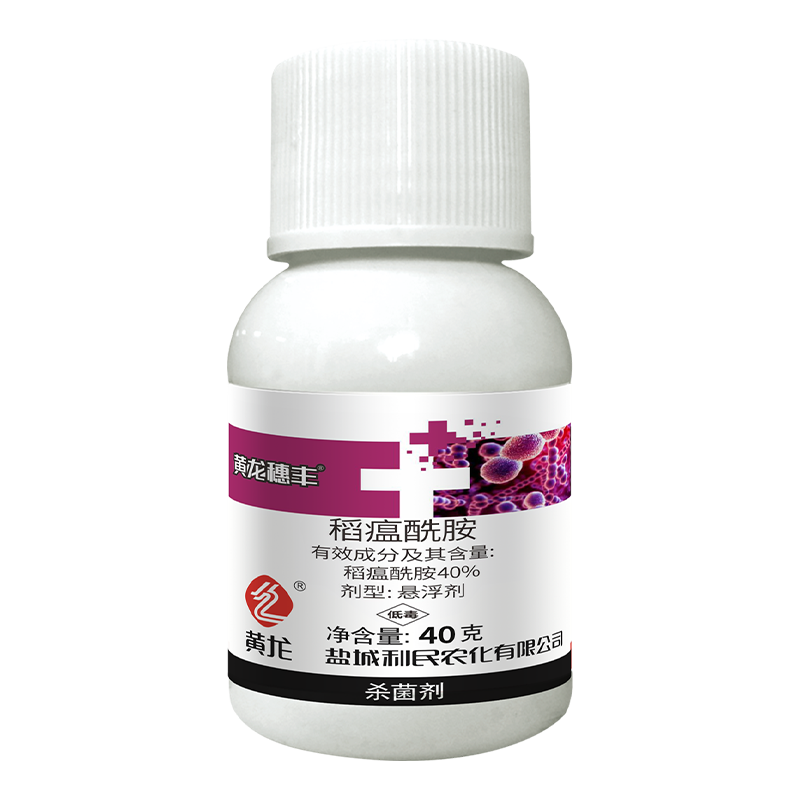
Fenoxanil 40% SC is a suspension concentrate formulation containing 400 grams of active ingredient per liter, designed for dilution in water and application as a spray to control fungal diseases in rice and other crops. Suspension concentrate formulations keep the active ingredient as fine solid particles dispersed in water, offering low odor, low flammability, and reduced solvent exposure compared with emulsifiable concentrates.
For growers and distributors comparing options, the practical takeaway is that an SC formulation balances efficacy, handling safety, and storage stability. Choosing it makes sense when you need a water based product that mixes easily, stays physically stable in the tank, and delivers consistent dosing when label rates are followed.
400 g per liter of fenoxanil
Water based suspension concentrate
Foliar fungicide for paddy and crops
Dilute in clean water with agitation
A pesticide formulation is the complete product as sold, combining the active ingredient with carriers, solvents, surfactants, dispersants, and stabilizers that determine how the material is stored, mixed, applied, and absorbed by the target. The same active ingredient can perform very differently depending on its formulation, which is why two products with identical chemistry may show different results in the field.
Each component has a defined job. Surfactants lower surface tension so droplets spread across leaf surfaces, dispersants keep solid particles separated, and thickeners prevent settling during storage. A well built formulation typically keeps suspended particles stable for at least two years under normal storage conditions between 0 and 35 degrees Celsius.
| Formulation | Carrier | Odor and Flammability | Typical Shelf Life |
|---|---|---|---|
| Emulsifiable Concentrate (EC) | Organic solvent | Strong odor, flammable | 2 to 3 years |
| Suspension Concentrate (SC) | Water | Low odor, non flammable | 2 years or more |
| Wettable Powder (WP) | Solid inert filler | Dust risk during mixing | 2 to 3 years |
| Granule (GR) | Solid granular carrier | No odor, ready to apply | 2 to 4 years |
Fenoxanil is a fungicide belonging to the cyanoacetamide chemical class, used mainly against rice blast caused by Magnaporthe oryzae and related diseases in cereals and other field crops. Its activity focuses on inhibiting fungal development at key stages, which is why timing of application relative to infection risk matters more than sheer spray volume.
Fenoxanil acts on the pathogen by interfering with melanin biosynthesis in fungal cell walls. Melanin is needed for appressorium formation, the structure fungi use to penetrate leaf tissue. Blocking this step reduces lesion formation and limits the spread of blast infections during humid, warm periods that favor disease.
Rice blast remains the primary target, with secondary activity noted against certain leaf and neck infections. Growers apply the product as a preventive or early curative treatment, generally before lesions become widespread, because established lesions are harder to suppress.
Rotating fungicides with different modes of action and limiting consecutive applications to the label maximum reduces the risk of pathogen resistance developing over multiple seasons. Integrated programs that combine chemical control with resistant varieties and cultural practices offer the most durable protection.
A 40 percent SC label means the concentrate contains 40 percent active ingredient by weight or volume, expressed in grams per liter on most technical sheets, which guides how much product to measure per unit of water.
The label lists the active content, formulation code, registration number, recommended crops, dose per hectare, spray volume, pre harvest interval, and re entry period. Technical data sheets add particle size, pH, suspensibility, and storage stability, all of which indicate how the product will behave in the tank.
Quality SC formulations typically achieve suspensibility above 80 percent after standard CIPAC testing, with median particle diameters kept in the low micrometer range to ensure even dispersion and reduced clogging of nozzles.
Typical field programs mix the required dose into 300 to 500 liters of water per hectare for knapsack or boom sprayers, adjusting upward for dense canopies. Accurate measurement and thorough agitation before and during spraying prevent settling and uneven coverage.
| Parameter | Typical Target | Why It Matters |
|---|---|---|
| Active content | 40 percent (400 g per liter) | Confirms label dose calculations |
| Suspensibility | Above 80 percent | Indicates stable dispersion in the tank |
| pH of 1 percent dispersion | Within 5 to 9 | Reduces chemical instability in mixed tanks |
| Storage stability | No significant change after 2 years | Protects product value over the season |
Correct mixing sequence and agitation are the two factors most often responsible for poor results with SC products, so following a consistent procedure protects both efficacy and equipment.
Applications made during periods of high humidity, leaf wetness, and forecast infection conditions deliver the greatest return, while late sprays after lesions are widespread often underperform. Scouting fields weekly and tracking weather forecasts help align applications with the most vulnerable crop stages.
Flat fan or hollow cone nozzles producing medium droplets between 200 and 400 micrometers typically provide balanced coverage with limited drift. Coverage checks using water sensitive paper help confirm that the spray reaches lower leaves and leaf sheaths where blast infections often begin.
Rinsing the tank and lines with clean water immediately after spraying prevents residue from hardening inside nozzles. Triple rinsing empty containers and disposing of them according to local regulations protects workers and the environment.
Safe handling protects applicators, bystanders, water sources, and the crop itself, and all steps should follow the product label and national regulations.
Applicators should wear chemical resistant gloves, long sleeved coveralls, eye protection, and a suitable respirator when mixing or spraying in enclosed areas. Washing hands and face after work and changing contaminated clothing reduces exposure risk.
Store SC products in original sealed containers, upright, in a dry locked area between 0 and 35 degrees Celsius, away from food, feed, seed, and direct sunlight. Freezing can cause irreversible particle aggregation, so protect stock from frost during winter transport and storage.
Each registered crop has a defined pre harvest interval, the minimum days between the last application and harvest. Respecting this interval keeps residues within maximum residue limits set by food safety authorities in destination markets.
Choosing between SC, EC, WP, and granular products depends on crop type, equipment, labor safety, and environmental conditions rather than a single universal advantage.
SC products require adequate agitation and can settle if left standing in the tank. They are also sensitive to freezing, so storage conditions matter. Growers in cold regions should plan winter storage carefully.
Most performance complaints trace back to mixing errors, timing mistakes, or equipment issues rather than inherent product weakness.
Sediment usually indicates insufficient agitation or hard water mixing. Using clean water, pre dispersing the product in a small volume, and filtering the tank solution through a suitable mesh restores uniform flow.
Poor control often results from late application, inadequate coverage, or high disease pressure beyond label expectations. Reviewing timing, coverage, and resistance history helps identify the real cause before changing products.
Injury symptoms can appear when tank mixing with incompatible products, spraying during extreme heat, or exceeding label rates. Running a small jar test and a small field test before large scale use reduces this risk.
Question: What does 40 percent SC mean on a fenoxanil label?
It means the suspension concentrate contains 40 percent active ingredient, equal to 400 grams of fenoxanil per liter of product.
Question: Is fenoxanil 40 percent SC safe to mix with other products?
Compatibility should be tested with a jar test and confirmed against the label, since some tank mixes can cause flocculation or reduced efficacy.
Question: Which crops is fenoxanil commonly used on?
Rice is the main crop for blast control, and any other crop use depends on current registration in the relevant country.
Question: Why choose an SC formulation over an EC formulation?
SC products use water instead of organic solvents, which lowers odor, flammability, and solvent exposure for applicators.
Question: How long can fenoxanil 40 percent SC be stored?
Properly stored SC products often remain stable for two years or more when kept between 0 and 35 degrees Celsius in sealed original containers.
Question: What causes sediment to form in the spray tank?
Sediment usually results from insufficient agitation, very hard water, or adding product before the tank has enough water and mixing action.
Question: How often can fenoxanil be applied in a single season?
The maximum number of applications and the interval between them are set on the registered label, and growers should follow those limits strictly.
Question: What personal protective equipment is recommended when mixing SC products?
Chemical resistant gloves, eye protection, coveralls, and a suitable respirator in enclosed spaces provide the core protection recommended on most labels.
Question: Can SC products be used in cold weather?
Storage must avoid freezing, and mixing in cold water should be done carefully with thorough agitation so the suspension disperses evenly before spraying.
Question: What is the most important factor for good disease control with fenoxanil?
Timely application before or at the early stage of infection, combined with uniform coverage and resistance management, drives the most reliable results.
Contact info.
 Tel: +0086(515)88719699
 Phone: +86-18261226148
 E-mail: limin@chinapesticides.com
 Add: 21F & 22F, Jinhang Fortune Building, No. 988 Luming Road, Yancheng City, Jiangsu Province, China
Im.&Ex. Departemt
Tel:+0086(515)88356821
E-mail:
lany@chinapesticides.comFollow Us
Copyright © Yancheng Limin Chemical Co., Ltd. All Rights
Reserved
 Wholesale Agrochemical Manufacturers