 EN
EN
 English
  中文简体
中文简体
Home / News / Industry News / Naphthalene Sulfonate Condensate Dispersants in Pesticide Formulations
Industry News
Content
You have just prepared a batch of water-dispersible granules with a new active ingredient. The granules break apart beautifully in the beaker within thirty seconds, but after two minutes the suspension starts to flocculate and settles into a loose layer that will not redisperse. The suspension rate test comes back at 55 percent, far below the 80 percent threshold you need. Most formulators have lived through this scene. The first instinct is to blame the dispersant, and often that instinct is correct. After testing a few candidates, the naphthalene sulfonate condensate dispersant turns out to be the one that restores stability. This article explains why naphthalene sulfonate condensate (NSFC) remains one of the most dependable dispersant families for pesticide formulations, how it works, how to use it in different dosage forms, and how to avoid the quality problems that undermine its performance.
Naphthalene sulfonate condensate, also known as sodium naphthalene formaldehyde condensate or SNF/PNS, is an anionic condensation polymer produced by sulfonating naphthalene and then reacting it with formaldehyde under acidic conditions. After neutralization with sodium hydroxide, the product becomes a water-soluble powder or liquid. It is not a single molecule but a mixture of oligomers with different chain lengths, which explains why batch-to-batch consistency is so important.
Each repeating unit contains a hydrophobic naphthalene ring and a hydrophilic sulfonate group. The formaldehyde links the naphthalene rings into short chains. This amphiphilic structure is what allows the material to adsorb onto a pesticide particle surface while extending charged groups into the water phase. In everyday language, one end of the molecule likes to stay on the active ingredient and the other end likes water, so the particles are kept apart.
In the pesticide industry, you may also see the names polynaphthalene sulfonate, naphthalene formaldehyde condensate, or alkyl naphthalene sulfonate condensate. The standard sodium salt of naphthalene sulfonate formaldehyde condensate is the workhorse; alkylated versions have stronger hydrophobic character and are sometimes chosen for more lipophilic actives, but they are less common than the straight naphthalene type.
Because the chemistry is mature, it is tempting to treat NSFC as a commodity. That view creates real risk. The quality of naphthalene sulfonate condensate varies with sulfonation degree, average molecular weight, molecular weight distribution, residual sulfate, and unreacted naphthalene. Two bags with the same label can behave differently in the same formulation.
| Parameter | Typical Value | Why It Matters |
|---|---|---|
| Appearance | Dark brown powder or liquid | A sudden color change may indicate different raw material quality or process conditions. |
| pH (1% aqueous solution) | 7 to 9 | Strongly acidic or alkaline material can degrade pH-sensitive active ingredients. |
| Sodium sulfate content | 3% or lower | High salt content causes caking, poor flow, and can flocculate a suspension. |
| Water insolubles | Below 0.5% | Insoluble residues deposit on sprayer screens and reduce suspension quality. |
| Relative molecular weight (GPC profile) | Broad distribution, medium average | Too low molecular weight gives poor steric effect; too high may reduce adsorption rate. |
| Dispersing power (laboratory sedimentation test) | Meets supplier benchmark | A quick performance check that directly correlates with formulation suspension rate. |
The parameters above are not difficult to measure, but many formulators order NSFC by price and appearance alone. That can be an expensive mistake, especially for water-dispersible granules and suspension concentrates where interaction with other adjuvants is subtle.
The performance of a dispersant is ultimately about what happens at the solid-liquid interface. When a pesticide active ingredient is ground to a fine powder, its newly created surface is usually hydrophobic. In water, these hydrophobic particles tend to aggregate to reduce the total surface energy. A dispersant like NSFC interferes with that process.
First, the naphthalene rings of NSFC adsorb onto the hydrophobic surface of the active particle through van der Waals forces and hydrophobic interactions. For many aromatic pesticides, especially triazole fungicides and strobilurin derivatives, this adsorption is relatively strong. The sulfonate groups then face the water, ionize, and create a negatively charged layer around each particle.
Second, those negative charges push particles apart. This is electrostatic repulsion. The magnitude of repulsion is often evaluated by zeta potential. A well-dispersed pesticide suspension typically shows a zeta potential with an absolute value well above 20 mV, often 30 to 50 mV depending on the system. NSFC raises this negative charge density and keeps particles separated during grinding, storage, dilution, and spraying.
Third, the condensate chain provides a modest steric barrier. NSFC is not as effective in steric hindrance as polycarboxylate dispersants, because its chain length is relatively short. This is an important distinction. NSFC should be understood as primarily an electrostatic dispersant, while polycarboxylates work mainly by a combination of anchoring and long polymer chains that physically block particle approach.
NSFC also acts as a grinding aid. During wet milling or jet milling, freshly exposed surfaces are immediately covered by the dispersant, which prevents re-agglomeration and allows the grinding media to act on new surfaces rather than re-breaking aggregates. This benefit is often overlooked but is one of the reasons why a good dispersant shortens milling time and narrows the particle size distribution.
It is worth repeating that NSFC is not a wetting agent. A common misconception in small formulation labs is that one additive should do everything. In a wettable powder or water-dispersible granule, the wetting agent, usually a sulfosuccinate or alkyl naphthalene sulfonate sodium salt, is responsible for helping water penetrate and wet the particles quickly. The NSFC takes over after the particle is wet, stabilizing the dispersed state. If your WDG has good dispersion but poor wetting, do not add more NSFC; add a wetting agent.
Another limitation is sensitivity to electrolytes. Because NSFC works through charged groups, high concentrations of calcium and magnesium ions in hard water can partially neutralize the charge and cause flocculation. In areas with hard water above 500 ppm as calcium carbonate, check the compatibility of your formulation in the actual dilution water. Some suppliers offer specialty grades of naphthalene sulfonate condensate with improved salt tolerance, but the effect is not infinite. Knowing this limitation helps you design a formulation that does not fail in the field before it reaches the farm.
NSFC is used in nearly every kind of solid pesticide formulation, but its role and dosage differ by dosage form. Understanding these differences is the difference between making a formulation work and making it work efficiently.
WP is still a dominant formulation in many growing regions because it is inexpensive to produce and has no need for expensive drying equipment if the raw materials are already dry. In a typical WP, NSFC is added at 3 to 8 percent by weight, often with a wetting agent at 1 to 3 percent. The powder is mixed with fillers such as kaolin or attapulgite and then milled to a fine particle size, usually with a median diameter of about 5 to 20 micrometers.
NSFC is a natural fit for WP because the final product is already a powder that must be suspended in water. After milling, the dispersant molecules coat the active surface and stay there during storage and transport. When the farmer pours the powder into a spray tank, the goal is a stable suspension that does not settle quickly or create lumps at the bottom. High-quality NSFC directly supports that goal and is often the primary dispersant in commercial WP products that contain multiple active ingredients.
In WDG formulations, NSFC is usually used at 8 to 15 percent by weight. The reason for this higher loading is that the extruded granules must first disintegrate in water, and then the resulting fine particles must remain suspended without additional mechanical energy. The dispersant has to work quickly enough to stabilize the suspension and prevent the newly dispersed particles from colliding and re-aggregating.
WDG technology is more demanding than WP because the extrusion and drying processes expose the particles to heat, shear, and moisture. The dispersant needs to survive these steps. NSFC is thermally stable and dry enough to be incorporated directly into an extruder. In the case of fluidized-bed granulation, a liquid version of NSFC can be sprayed onto the fluidizing powder to build granules. Both approaches are well-practiced in the industry.
One common pitfall is to use too much NSFC. An overdosed WDG can become too hydrophilic, causing the granules to disintegrate so fast that a gel-like layer forms on the water surface and traps air. The balance between quick disintegration and clean suspension is delicate. A careful formulation study is always better than assuming that more dispersant equals better performance.
SC is a liquid formulation in which the active ingredient is suspended in water. Here, the main dispersants are usually polycarboxylate or EO-PO block copolymers, not NSFC. NSFC is used as an auxiliary dispersant or crystallization inhibitor in certain SC products. The mechanism of crystallization inhibition is straightforward: by adsorbing onto crystal faces, NSFC slows the dissolution and recrystallization process known as Ostwald ripening. This becomes critical for active ingredients with slightly higher water solubility, where small crystals dissolve and deposit onto larger crystals during temperature cycling.
If you develop an SC and experience crystal growth after heat storage, adding a small amount of NSFC, typically 1 to 2 percent, can solve the problem without destabilizing the continuous phase. However, NSFC alone cannot give SC its long-term viscosity and physical stability. Use it as a supporting tool, not the main dispersant.
| Dispersant Type | Primary Mechanism | Best Fit | Main Limitation |
|---|---|---|---|
| Naphthalene sulfonate condensate | Anionic electrostatic | WP, WDG, some SC crystal control | Salt sensitivity |
| Lignosulfonate | Anionic with some surface activity | WP, WDG | Dark color, variable quality, lower efficiency |
| Polycarboxylate | Steric plus electrostatic | SC, high-load WDG | Cost, potential hydrolysis in alkaline systems |
| EO-PO block copolymer | Steric | SC, microemulsion | High cost, foaming, limited solid compatibility |
The most practical takeaway from this comparison is not that one dispersant is universally better. It is that every formulation type creates a different set of demands. NSFC is the safe and economical default for WP and WDG, and it earns its place as a secondary component in SC when crystal growth is the problem.
Some of the most widely used fungicides in the world come from two chemical families: triazoles and strobilurins. Triazoles include tebuconazole, hexaconazole, propiconazole, flutriafol, and epoxiconazole. Strobilurins include azoxystrobin and pyraclostrobin. Both families are aromatic, hydrophobic, and highly suitable for solid formulations, which makes them natural partners with NSFC.
The surface chemistry of triazole crystals tends to be dominated by aromatic ring interactions. NSFC adsorbs well onto these surfaces, but the quality of the active ingredient matters considerably. If the technical product contains residual solvents, manufacturing byproducts, or impurities that accumulate on the particle surface, those impurities can block dispersant adsorption. The result is a dispersant requirement that jumps from 8 percent to 12 percent or higher for no obvious reason. Tracing the problem back to the technical active ingredient is an underappreciated skill.
Take tebuconazole as an example. High-purity tebuconazole technical powder with a declared content of 97 percent is different from a technical powder that contains the same assay but has a different impurity profile. The differences do not show up in simple purity assays but appear in the formulation's suspension rate. This is why vertical integration in pesticide manufacturing has a direct effect on formulation quality: when the active ingredient is produced and tested by the same organization that makes the formulation, the risk of an unknown impurity interfering with the dispersant is much easier to control.
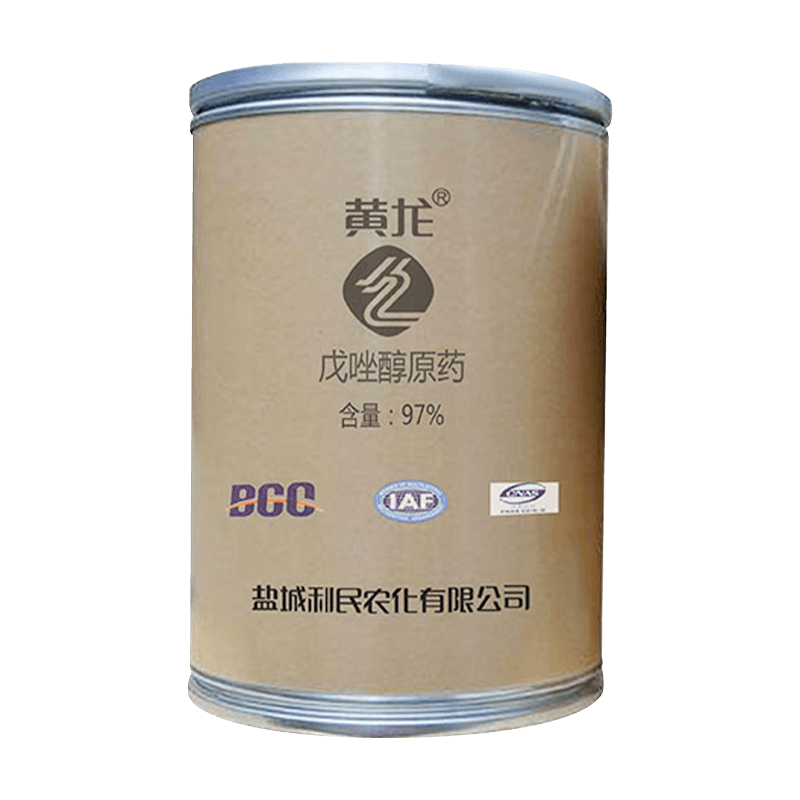 Tebuconazole 97% Technical Fungicide PowderHigh-purity tebuconazole technical is a triazole fungicide for seed treatment and foliar sprays. This grade's impurity profile directly affects formulation suspension rate, making it a critical input for testing dispersant compatibility.View Product →
Pyraclostrobin represents another interesting case. It is often formulated as a water-dispersible granule combined with tebuconazole or other triazoles. The challenge with a binary or ternary WDG is that each active ingredient has its own surface properties, crystal habit, and hydrophobicity. When the two powders are milled together, NSFC may preferentially adsorb on one component, leaving the other partially unprotected. A simple way to detect this is to measure the zeta potential of each individual active ingredient in separate dispersions and compare it with the mixture. If the mixture has a much lower zeta potential, competitive adsorption is likely occurring.
In practical terms, competitive adsorption can be managed by increasing NSFC concentration, by adding a secondary dispersant such as polycarboxylate, or by changing the milling procedure so that the more difficult active is pre-coated with dispersant before blending. The formulator should not assume that a dispersant that works beautifully on one active is automatically optimal for its mixture.
When we work with pyraclostrobin 25 percent suspension concentrate, NSFC is often included at a low percentage to stabilize the active against crystal growth under cold storage. The primary dispersant is usually a polycarboxylate that provides steric stabilization. NSFC fills the crystal-habit role.
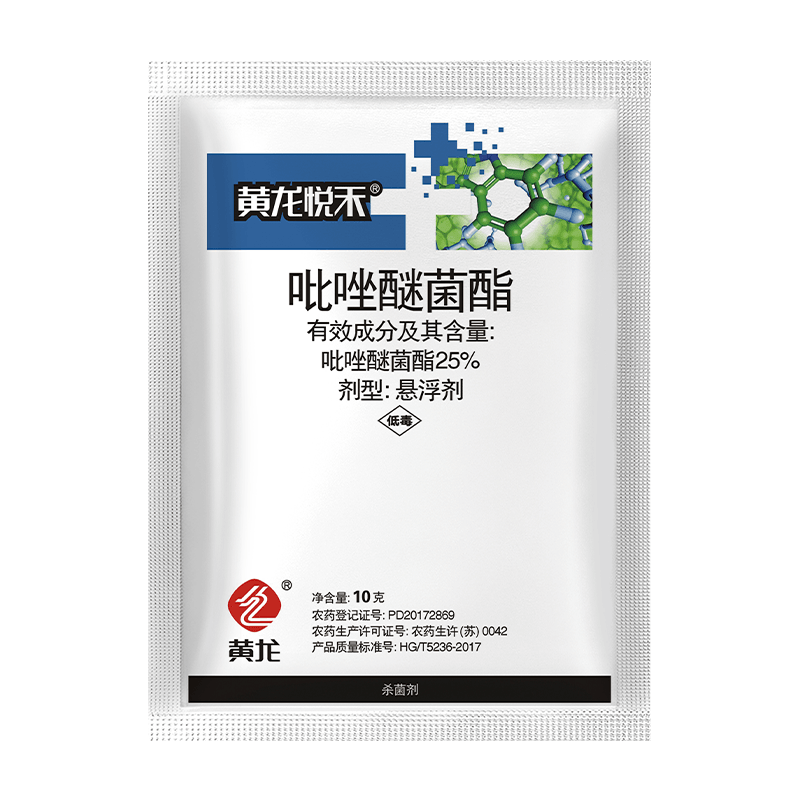 Pyraclostrobin 25% Suspension ConcentrateThis strobilurin-based suspension concentrate offers broad-spectrum protective and curative activity. It is used here to illustrate how NSFC stabilizes crystal growth under cold storage alongside a primary polycarboxylate dispersant.View Product →
The broader lesson is that solid dispersant performance cannot be separated from active ingredient quality and identity. A competent formulation group will generate its own compatibility data instead of relying on supplier brochures.
If you want to evaluate whether a new NSFC grade is suitable for your product, start with a simple laboratory experiment rather than jumping into full-scale production. The following procedure has proven itself in many formulation laboratories.
This list covers the most common failure modes. It is not meant to replace a full factorial design, but it is enough to screen out unacceptable dispersants before you waste expensive technical material.
NSFC loading in a typical WP is 3 to 6 percent. In a WDG formed by extrusion, start at 8 to 10 percent and adjust based on the granule integrity and disintegration test. For an SC, keep NSFC at or below 2 percent unless you are specifically using it as a crystal growth inhibitor.
Let us illustrate with a classic WP formulation containing carbendazim and triadimefon. Carbendazim is a benzimidazole fungicide with a crystalline, hydrophobic surface that responds well to naphthalene sulfonate condensate. Triadimefon is a triazole with slightly different adsorption characteristics. A combined WP needs enough NSFC to cover both surfaces and a wetting agent that does not interfere with adsorption. The final formulation is a good benchmark for testing a new NSFC batch because it contains two actives with different surface chemistries and demands a suspension rate above 80 percent.
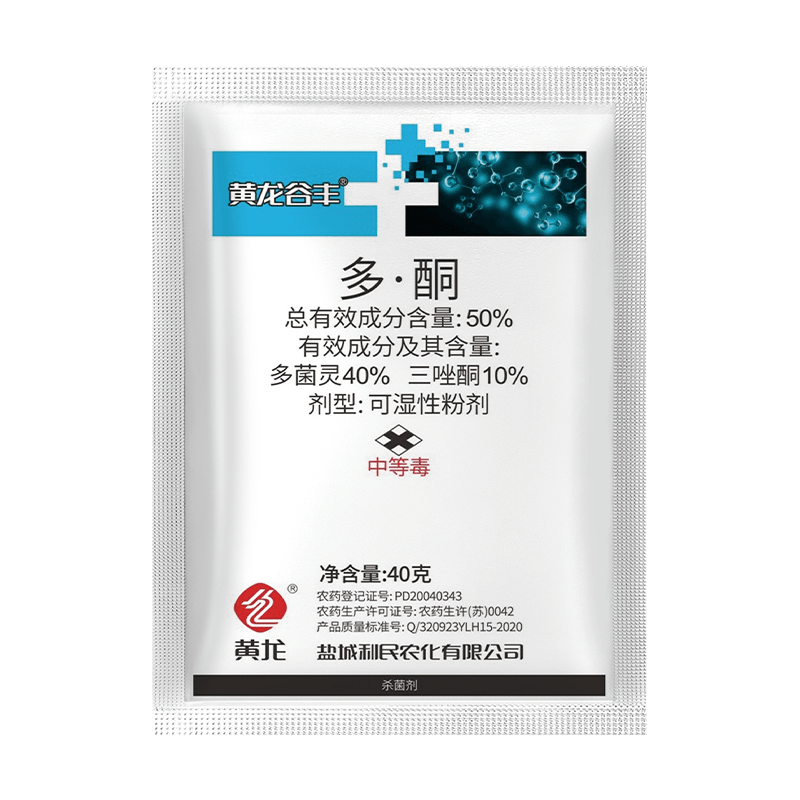 Carbendazim 40% + Triadimefon 10% Wettable PowderThis combined wettable powder targets rapeseed sclerotinia, wheat powdery mildew, and fusarium head blight. Its two actives with different surface chemistries make it a useful benchmark for evaluating NSFC batch consistency.View Product →
When the screening results are consistent across two different active ingredient systems, you can be reasonably confident that the NSFC grade is reliable.
The market is full of naphthalene sulfonate condensate suppliers, and the price range is wide. The cheapest products are often produced with less rigorous process control, and they can contain high amounts of sodium sulfate, unreacted naphthalene, or lower condensate chain length. These impurities do not necessarily render the product useless, but they make formulation performance unpredictable.
A common quality issue is the presence of unreacted naphthalene. Naphthalene has a strong odor and is volatile. If a bag of dispersant smells strongly of naphthalene, it may affect the odor of the final formulation and, in some cases, the crop. Another common issue is excessive sodium sulfate, which appears as white crystals in the powder. Sodium sulfate is cheap because it is a byproduct of the neutralization step, and an unscrupulous producer may keep it in the product to reduce production cost. High sodium sulfate content draws moisture, promotes caking, and can salt out the active ingredient in an SC.
One misleading indicator is color. Many formulators assume that a lighter powder is better. In reality, the dark brown color of NSFC comes from the naphthalene sulfonation chemistry and does not, by itself, tell you whether the product is good or bad. Some users prefer lighter color for aesthetic reasons, but that preference should not replace a performance test.
When you receive a new batch of NSFC from a supplier, check the certificate of analysis against a clearly written specification. The specification should include the parameters mentioned earlier: appearance, pH, sodium sulfate, water insolubles, and dispersing power. More importantly, ask the supplier which test method was used for each parameter. Two laboratories can use different methods and report different values for the same material.
Do not skip the small-scale formulation test. No certificate of analysis can tell you how a dispersant will perform in your specific formulation, because the active ingredient and other adjuvants matter so much. A reliable supplier will accept that and work with you on the test. Be cautious of a supplier that guarantees performance in every formulation, because no dispersant can do that.
In the pesticide industry, a low price per kilogram is often remembered long after the suspension rate failure becomes a problem. It is wiser to qualify a supplier, keep a stock of reference samples, and audit the supplier's process if your quality team has the capacity. This habit separates professional formulation companies from those that buy solely on price.
Dispersant selection is not an isolated variable. The same NSFC that works well with one batch of technical material may fail with the next batch if the technical material has changed. This is a real headache in the industry, and it is far more common than most companies admit.
Impurities in the active ingredient can be surface-active themselves. Some byproducts of pesticide synthesis are more hydrophobic than the active molecule and will occupy the adsorption sites that were expected to be available for the dispersant. If the impurity profile changes, the dispersant demand changes. The formulator then faces an unexplained suspension rate drop and may spend days investigating the dispersant, only to discover that the technical material was not identical even though the active assay was within specification.
Crystal habit is equally important. Two batches of the same technical compound can have different crystal morphology, for example needle-shaped versus block-shaped crystals. Needle-shaped crystals tend to pack into a larger apparent volume and can seriously destabilize a suspension. Naphthalene sulfonate condensate cannot repair a poor crystal habit; it can only stabilize the particles after grinding. This is another reason why the relationship between the synthesis plant and the formulation plant is strategically important.
At our company, the production chain reaches from pesticide intermediates, such as triazole and pinacolone, to technical actives, then into formulations, and finally to fertilizer products. This integrated structure lets us see the direct influence of upstream quality on downstream dispersant performance. When we use tebuconazole 97 percent technical in a solid formulation, the same team controls both the synthesis quality and the formulation process, which removes a whole category of hidden variation. You can find a description of this integration on our company profile page.
For buyers of final formulations, it is worth asking your supplier not just what dispersant they use, but where the technical material comes from. A formulation company that purchases technical actives on the open market can still make good products, but the dispersion system will always be more vulnerable to changes in the upstream supply. A company that synthesizes its own actives is not automatically better, but it has one less unknown in the system. This point is developed further in our commentary on moving from raw actives to global crop protection, where the role of upstream supply quality in final product consistency is discussed in depth.
In practice, the quality of NSFC dispersant, the quality of the active ingredient, and the process conditions in the mill and granulator are all coupled. Optimizing one without checking the others leads to fragile formulations. The formulator should treat every new batch of active ingredient as a new variable, no matter how many years the same supplier has been providing it. A quick suspension rate check with your existing dispersant is a low-cost safeguard against upstream drift.
Naphthalene sulfonate condensate is not an exciting chemical. It has been used in construction admixtures, dye dispersants, leather tanning, and agriculture for many decades. Yet in pesticide formulations it maintains a firm role because it combines strong adsorption on hydrophobic actives, good thermal stability, low foaming tendency, and an unbeatable cost-performance balance.
What has changed in recent years is not the chemistry of NSFC but the expectations of the formulator. Global pesticide regulations are pushing toward more concentrated formulations, higher loading rates, better biological efficacy, and lower environmental impact. These pressures make it harder to hide formulation defects behind an overdose of dispersant. A modern formulation needs the right dispersant at the right concentration, and that requires deep knowledge of how the dispersant interacts with the active ingredient and the other components.
For a formulator who is evaluating NSFC, the practical recommendations can be summarized in four steps. First, verify the chemical quality of the dispersant itself with simple tests for pH, sodium sulfate, water insolubles, and dispersing power. Second, test it in the target formulation at several concentrations, not just at the concentration recommended by the supplier. Third, use a standard accelerated storage test to check whether the formulation can survive temperature cycling. Fourth, track the quality of the active ingredient continuously, because the best dispersant in the world cannot compensate for a variable technical product.
A good formulation is never the victory of a single ingredient. It is the result of a patient compromise between the active molecule, the dispersant system, the other adjuvants, the manufacturing process, and the water used in the spray tank. Naphthalene sulfonate condensate will continue to be part of that compromise for a long time, especially in solid formulations where its anionic, electrostatic mechanism remains exactly what the formulation needs. The formulators and procurement specialists who understand that mechanism, rather than those who simply buy the cheapest grade, will be the ones who produce reliable products season after season.
Contact info.
 Tel: +0086(515)88719699
 Phone: +86-18261226148
 E-mail: limin@chinapesticides.com
 Add: 21F & 22F, Jinhang Fortune Building, No. 988 Luming Road, Yancheng City, Jiangsu Province, China
Im.&Ex. Departemt
Tel:+0086(515)88356821
E-mail:
lany@chinapesticides.comFollow Us
Copyright © Yancheng Limin Chemical Co., Ltd. All Rights
Reserved
 Wholesale Agrochemical Manufacturers